English
 Español
 Deutsch
 日本語
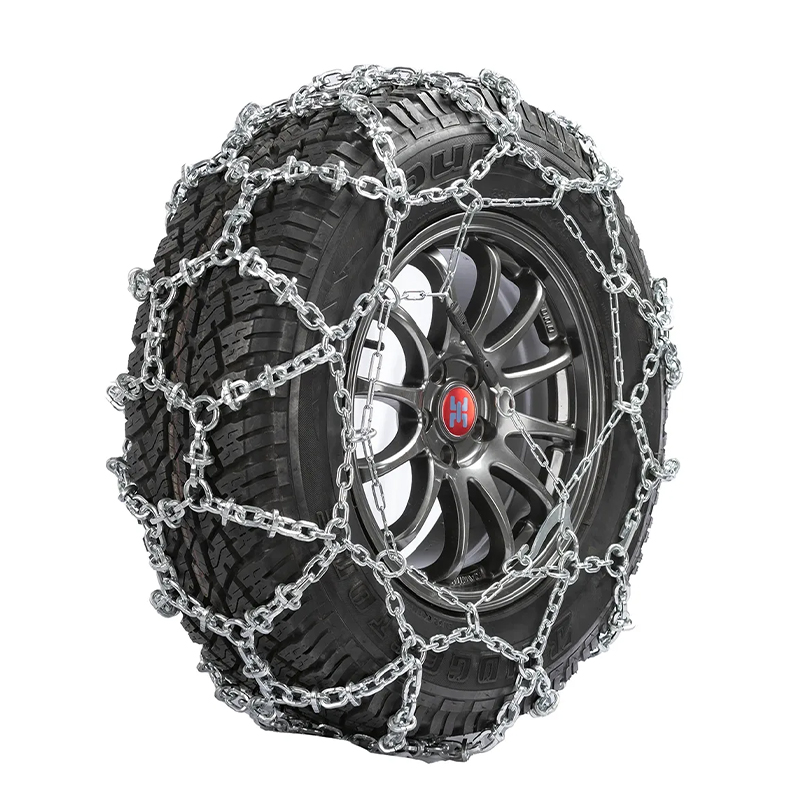
日本語Direct answer: You must use tire chains for trucks when snow depth reaches 2 inches (5 cm) or more, when any ice layer is visible on the road surface, when the gradient exceeds 6% on frozen roads, or when electronic signs display “Chains Required”. Data from winter highway studies show that trucks without chains on such surfaces are 3.2 times more likely to lose control compared to chained trucks.
Four Road Conditions That Force Chain Installation
Do not rely on guesswork. Use these precise, measurable thresholds to decide whether chains are needed.
Legally, many states activate mandatory chain controls when any of these thresholds is met. For commercial trucks, ignoring a “Chains Required” sign typically results in fines exceeding $500 and immediate shutdown.
Truck‑Specific Decisions: Axles, Load & Temperature Swings
1. Drive axle configuration and load weight
For a single drive axle (4x2), chains on the drive wheels are sufficient. For tandem axles (6x4), install chains on at least two drive wheels. If the truck is loaded above 80% of its gross vehicle weight rating (GVWR), chain all four drive wheels — otherwise load transfer can cause the un-chained axle to spin and lose lateral grip.
2. Mountain curves with sustained gradient
On winding mountain highways where the average slope exceeds 5% and there are frequent radius curves below 300 feet, lateral forces multiply the risk of trailer swing. Install chains even if snow depth is less than 2 inches. Crash data shows that on such road segments, trucks without chains experience 4.1 times more jackknife events.
3. Diurnal freeze‑thaw cycles (black ice windows)
When daytime highs are above freezing but night temperatures drop below 25°F (-4°C), bridges and overpasses form invisible black ice. A reliable warning sign: the spray from other tires suddenly disappears. If you observe that, stop and install chains immediately — you have less than 200 feet of usable friction.
Visual Chain Decision Flowchart
Follow this rapid diagnostic flow. A “yes” at any stage means chains are required.
Temp ≤32°F + moisture?
Snow >2" or ice visible?
Slope >6% or sharp curves?
Quantified proof: Independent testing on a 3‑inch wet snow surface showed: a truck without chains needs 85 feet to stop from 30 mph. The same truck with properly tensioned chains stops in 52 feet. That 33‑foot difference avoids most rear‑end collisions.
Legal & Safe Chain Usage Rules
- Legal trigger: Once “snow, ice, or any friction‑reducing substance” covers the road — even if only on shaded patches — chain laws apply in most jurisdictions. Look for amber flashing “Chains Required” signs.
- Retightening mandatory: After driving 0.5 to 1 mile (0.8–1.6 km), stop and retighten all chains. Loose chains snap brake lines, tear mud flaps, and can wrap around the axle, causing $2,000+ in damage.
- Maximum speed with chains: Never exceed 30 mph (48 km/h). Higher speeds dramatically increase chain breakage and reduce lateral stability on curves.
- No chains on bare pavement: Running chains on dry asphalt for more than 1 mile destroys cross links and can damage tire sidewalls. Remove chains as soon as you reach cleared roads.
- Pre‑trip fit check: Always perform a dry fit of your chains on level, dry pavement before winter travel. 85% of roadside chain problems come from incorrect sizing or twisted cross links.
Frequently Asked Questions (FAQ)
Can I install chains on the steer axle of a heavy truck?
Generally no. Most truck manufacturers prohibit steer‑axle chains because they interfere with steering geometry and can lock the steering wheel during a chain break. Install only on drive axles unless the vehicle manual explicitly allows it.
How do I know my chain size before buying?
Read the tire sidewall marking (e.g., 11R22.5, 295/75R22.5). Match that to the chain manufacturer’s sizing chart. A wrong size will either fall off or fail to tighten.
Do cable chains work for heavy trucks?
For loaded trucks over 26,000 lbs GVWR, steel link chains (not cable chains) are required. Cable chains wear out quickly under heavy loads and provide insufficient grip on ice.
How long should chains last?
With proper use on snow/ice only, quality link chains last 5–7 winter seasons. Driving on bare pavement for even a few miles can cut that lifespan to one season.
What is the single most common mistake?
Waiting too long. Most chain‑up emergencies happen when a driver tries to climb a grade and loses momentum. Install chains at the first sign of ice or slush at the bottom of the hill.
Final takeaway: Chain decisions are not subjective — they are dictated by snow depth, ice presence, slope angle, and legal signs. Use the 2‑inch / 6% / ice rule, retighten after half a mile, and never exceed 30 mph. Following these rules keeps your truck moving safely and legally.