English
 Español
 Deutsch
 日本語
日本語Introduction
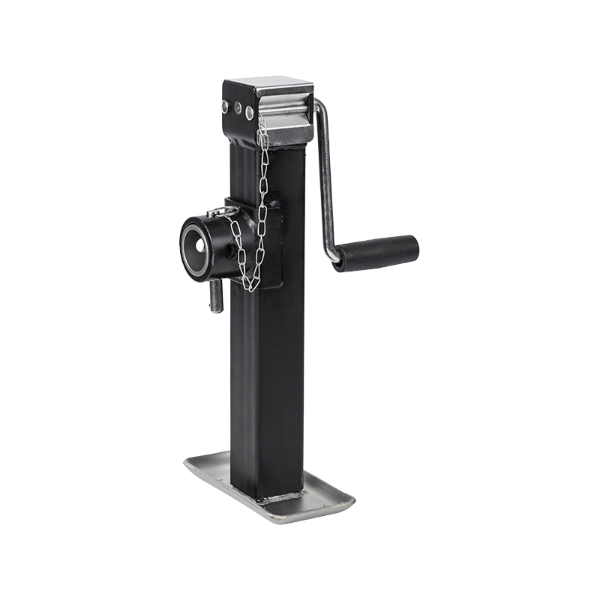
Trailer lift jacks are essential tools for anyone who needs to safely lift and level trailers. Whether you’re a casual camper, a trucker, or someone who uses trailers for heavy-duty industrial purposes, understanding the different types of trailer lift jacks can help you choose the right one for your needs.
Types of Trailer Lift Jacks
There are several types of trailer lift jacks available, each designed for specific needs. Understanding the differences between manual, electric, and hydraulic trailer jacks can help you make an informed decision.
Manual Trailer Lift Jacks
Manual trailer lift jacks are the most common and cost-effective option for trailer lifting. They are operated by hand, usually with a crank or lever, making them suitable for lighter loads and situations where electric power is not readily available.
Advantages of Manual Jacks:
- Simple to use
- No need for batteries or electricity
- Lower initial cost
- Lightweight and portable
Disadvantages of Manual Jacks:
- Requires physical effort to operate
- Can be slower compared to electric models
Electric Trailer Lift Jacks
Electric trailer lift jacks offer the convenience of automatic lifting with the push of a button. These jacks are ideal for those who need to lift heavy trailers frequently or those who have limited physical strength.
Advantages of Electric Jacks:
- Easy to use with one-touch operation
- Can handle heavier loads with less effort
- Ideal for people with physical limitations
- Faster than manual jacks
Disadvantages of Electric Jacks:
- More expensive than manual models
- Requires a power source (battery or vehicle connection)
- Heavier than manual jacks
Hydraulic Trailer Lift Jacks
Hydraulic jacks use fluid pressure to lift heavy trailers. They are known for their smooth operation and ability to handle very heavy loads, making them ideal for commercial or industrial use.
Advantages of Hydraulic Jacks:
- Can lift very heavy loads
- Smooth and easy to operate
- Less physical effort required
Disadvantages of Hydraulic Jacks:
- Higher maintenance cost
- Can be more expensive
- Requires careful handling to prevent fluid leaks
Key Features to Look for in Trailer Lift Jacks
When shopping for a trailer lift jack, there are several important features to consider. These features can influence the jack’s functionality, durability, and ease of use.
Load Capacity
The load capacity is perhaps the most important factor to consider. Ensure that the jack you choose can handle the weight of your trailer. Trailer lift jacks are rated for different load capacities, typically ranging from 1,000 pounds to 12,000 pounds or more. Always choose a jack with a load capacity that exceeds the weight of your heaviest trailer.
Mounting Style
Trailer lift jacks come in two main mounting styles: weld-on and bolt-on. Weld-on jacks are permanently attached to the trailer frame, while bolt-on jacks are designed for easy installation and removal. If you need flexibility, a bolt-on model may be the better option.
Jack Travel
Jack travel refers to the distance the jack can extend to lift the trailer. Ensure that the travel distance is sufficient to raise the trailer to the desired height for leveling or hitching.
Weather Resistance
Trailer jacks are exposed to outdoor elements, so it’s essential to choose a jack made from durable materials like galvanized steel or powder-coated metals that can withstand rust and corrosion.
Ease of Operation
Whether you choose a manual, electric, or hydraulic trailer jack, ease of operation is key. Look for features like smooth cranks, easy-to-press buttons, or simple lever systems that make the lifting process more efficient.
Choosing the Right Trailer Lift Jack for Your Needs
Choosing the right trailer lift jack depends on your specific needs. Here are some questions to ask yourself when selecting a trailer jack:
- What type of trailer do I own? Heavy-duty trailers may require hydraulic or electric jacks, while smaller trailers can often be lifted with manual models.
- How often will I need to lift the trailer? Frequent use may justify the cost of an electric or hydraulic jack, while occasional use might be fine with a manual jack.
- What is the terrain like where I’ll be using the jack? If you’re often on rough terrain, you may want a more durable jack that can withstand the added stress.
- What is my budget? Manual jacks are typically less expensive, while electric and hydraulic jacks come at a higher price.
About TCH
While we refrain from mentioning specific brands and companies, there are several models available that feature a combination of manual, electric, and hydraulic options. For example, Shanghai TCH Metals & Machinery Co., Ltd. offers a range of trailer jacks, encompassing both manual and electric models, with various load capacities and mounting options. This flexibility enables users to find the most suitable jack to meet their specific needs.
TCH provides trailer jacks designed to meet the highest standards of durability and ease of use, featuring robust construction that ensures smooth operation in all weather conditions.
Comparison of Different Types of Trailer Lift Jacks
| Feature | Manual Trailer Lift Jack | Electric Trailer Lift Jack | Hydraulic Trailer Lift Jack |
|---|---|---|---|
| Load Capacity | 1,000-6,000 lbs | 1,000-12,000 lbs | 2,000-15,000 lbs |
| Operation | Manual crank or lever | Electric button | Hydraulic pump |
| Installation | Bolt-on or weld-on | Bolt-on | Bolt-on or weld-on |
| Travel Distance | 10-15 inches | 12-18 inches | 10-20 inches |
| Weather Resistance | Moderate (steel) | High (galvanized steel) | High (powder-coated) |
| Cost | Low | Moderate | High |
FAQ Section
Q1: What’s the difference between manual, electric, and hydraulic trailer lift jacks?
A1: Manual jacks require physical effort to operate, electric jacks use a push-button system for lifting, and hydraulic jacks rely on fluid pressure for lifting heavy loads.
Q2: Can I use an electric trailer lift jack for a heavy-duty trailer?
A2: Yes, many electric trailer lift jacks can handle heavy-duty trailers, but ensure you select a model with the appropriate weight capacity.
Q3: How often should I maintain my trailer lift jack?
A3: Regular maintenance, such as checking for rust, lubricating moving parts, and ensuring proper operation, is recommended to extend the life of your trailer jack.
Q4: Can I use a manual jack on any trailer size?
A4: Manual jacks are suitable for smaller to medium-sized trailers. For larger, heavier trailers, electric or hydraulic jacks are preferred due to their higher load capacities.
Q5: Are trailer lift jacks weather-resistant?
A5: Most trailer lift jacks are built with weather-resistant materials, like galvanized steel or powder-coated finishes, to ensure durability in outdoor conditions.
Conclusion
Trailer lift jacks are essential tools for anyone who needs to lift, level, or stabilize a trailer. By understanding the different types of trailer jacks available, including manual, electric, and hydraulic models, you can choose the best jack for your needs. Whether you’re looking for ease of operation, durability, or the ability to handle heavy loads, there is a trailer lift jack to meet your specific requirements.