English
 Español
 Deutsch
 日本語
The Science of Grip: Why Chains Outperform Rubber on Ice
Mechanical Interlocking Versus Rubber Friction
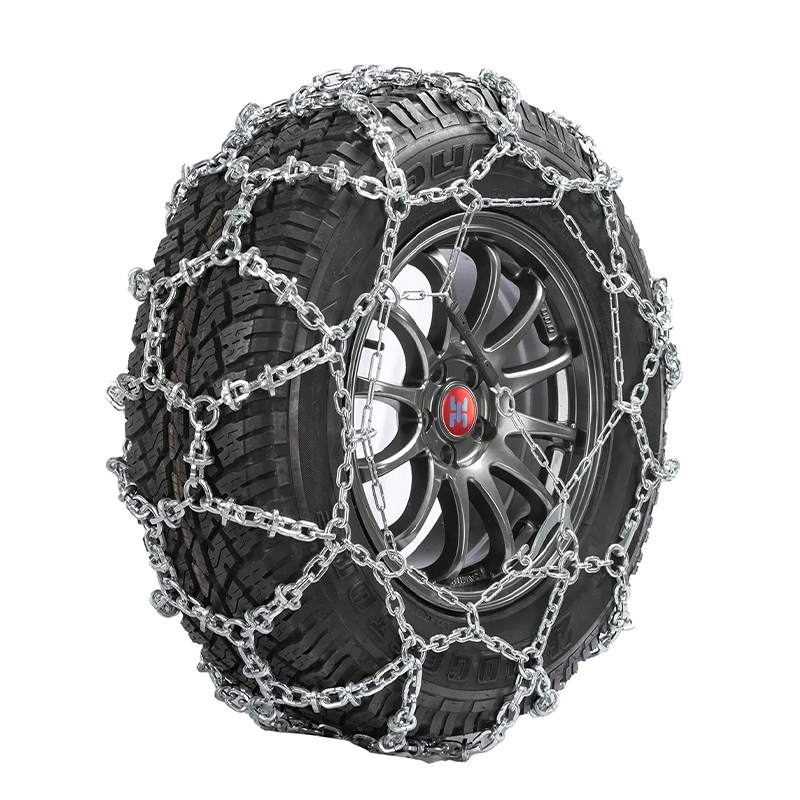
A rubber tire depends on friction between its compound and the surface beneath it. That friction weakens dramatically when the surface is glazed with ice or covered with a thin film of meltwater. Metal chain links behave differently. Their cross-section pushes into the snow and ice, creating a physical lock that resists sliding in every direction the wheel tries to move.
Research published by SAE International under reference 2006-01-0560 compared chained tires with a range of dedicated winter tires on snow and ice surfaces. The study found that chained tires delivered longitudinal and lateral performance that matched or exceeded the best winter tires tested on those surfaces, which is a striking result given how much more sophisticated modern winter rubber has become.
On surfaces where rubber compounds lose their bite, a metal lattice gripping the ice offers a fundamentally different kind of traction.
The Traction Coefficient Advantage
Engineers describe grip with a traction coefficient, which expresses how much force a tire can transmit before it slips. On packed snow and ice, an ordinary tire may achieve a very low value. Chains raise that value substantially, and the improvement is most noticeable during braking and hill climbing, when the vehicle needs predictable deceleration and forward force at the same time.
| Surface Condition | Typical Standard Tire | Tire With Chains |
|---|---|---|
| Packed snow | Limited grip, long stopping distance | Strong grip, shorter stopping distance |
| Glare ice | Very low grip, high slide risk | Significantly improved bite |
| Slush over ice | Unpredictable response | More consistent response |
Once you understand why chains work, the next question is which design suits your driving and your vehicle. Choosing the wrong type can reduce comfort, cause handling problems, or even damage components.
Not All Chains Are Created Equal
Ladder Pattern Versus Diamond Pattern
Chain layouts fall into two broad families, and each one favors a different aspect of performance.
- Ladder pattern: Offers strong longitudinal traction, which helps with acceleration and braking in straight lines. It is the traditional choice for heavy snow and steep grades.
- Diamond pattern: Provides better lateral stability through corners and more even wear, making it a practical choice for mixed driving with frequent turns.
For drivers who mostly travel highways and mountain passes, a ladder layout usually delivers the most confident performance. For urban and suburban driving with sharp corners, a diamond layout often feels more composed.
Clearance Matters: SAE Class S and Low-Profile Options
Clearance is the single most common reason chains cause problems. Vehicles with low ride height, wide wheel arches, or tight suspension packaging have very little space between the tire and the surrounding components. A standard chain can strike brake lines, suspension arms, or the body itself.
Check your owner's manual first. The manufacturer specifies approved chain types and sizes for each tire fitment. Any chain you buy should match those guidelines.
For low-profile sedans and vehicles with limited clearance, look for chains labeled SAE Class S or designed as low-profile or cable-style products. These are engineered to take up less radial space while still providing meaningful grip.
| Clearance Category | Recommended Chain Type | Best Use Case |
|---|---|---|
| Generous clearance | Standard steel ladder or diamond | Trucks, SUVs, heavy snow |
| Moderate clearance | SAE Class S chain | Crossovers and mid-size vehicles |
| Minimal clearance | Low-profile or cable-style | Low-slung sedans and performance cars |
If you are unsure whether your vehicle has enough room, compare your tire dimensions against the chain manufacturer's fitment chart before purchasing.
Drive Type and Installation Position
Where chains go depends on which wheels deliver power. Front-wheel-drive vehicles need chains on the front axle, rear-wheel-drive vehicles need them on the rear, and all-wheel-drive systems vary by manufacturer. Many AWD owners are advised to fit chains to the rear or to all four wheels, but the owner's manual remains the definitive reference.
- Identify which axle receives engine power under normal driving.
- Confirm the manufacturer's recommendation for chain placement.
- Install chains on the driven wheels unless the manual specifies otherwise.
The Legal and Safety Reality: When You Actually Need Them
Understanding Chain Control Requirements
Many mountain regions use a tiered chain control system. The signs typically indicate three levels, often labeled R1, R2, and R3, and each level defines whether chains are advisable, required on certain vehicles, or required on all vehicles. When a sign reads that chains are required, driving without them can result in a citation and can also put you in danger if conditions deteriorate.
The Low-Speed Rule and Removal on Dry Pavement
Chains are designed for slow travel. Driving faster than their rated speed, typically around 30 to 40 km/h, can cause them to fail, damage tire sidewalls, and create vibration that affects steering. Chains should also be removed as soon as you reach clear, dry pavement, because continued use on dry roads wears both the tires and the road surface quickly.
Safety note: Stop in a safe location to inspect chain tension after the first few hundred meters of driving. Loose chains can come apart and strike the vehicle body.
How to Choose and Buy Snow Chains for Your Tires
Step 1: Locate Your Exact Tire Size
Your tire size is printed on the sidewall of each tire as a standardized code. Rather than relying on memory or an approximate figure, read the code directly off the tire and copy it exactly as shown — chain fitment depends on a precise match, so an approximate size is not good enough. If you are unsure which numbers on the sidewall form the size code, your vehicle's owner's manual or the tire manufacturer's documentation will identify it for you.
Step 2: Weigh Material and Durability
Material choice shapes both performance and convenience.
| Material | Strengths | Limitations |
|---|---|---|
| Steel link chain | Long service life, strong grip | Heavier, harder to install |
| Cable chain | Lightweight, compact, low clearance | Shorter life under heavy use |
| Textile or rubber traction aid | Easy to fit, suits minimal clearance | Limited lifespan, modest grip |
Step 3: Get a Quote Matched to Your Specifications
Rather than guessing which product fits, enter your tire size and vehicle details to see compatible options and current pricing. A quick check now prevents returns, installation trouble, and wasted money later.
Enter your tire size exactly as it appears on your tire sidewall, along with your vehicle details, to see compatible options and receive a real-time price quote for snow chains for tires that match your vehicle.
Maintenance and Storage: Protecting Your Investment
After each use, rinse off road salt and grit, dry the chains thoroughly, and apply a light protective coating to metal links to slow corrosion. Store them in a dry bag in the trunk or garage rather than leaving them exposed. Inspect hooks, tensioners, and links before each season. Replacing a worn component early costs far less than discovering a failure on a snowy mountain pass.
- Rinse and dry after every use
- Lightly oil metal links before storage
- Keep chains in a sealed, dry container
- Check for cracked links and stretched cables each season
Frequently Asked Questions
Q1: How much do snow chains for tires cost?
Prices vary with tire size, chain type, and material. Standard passenger vehicle sets generally fall within a moderate range, while heavy-duty or low-profile options cost more. Submit your tire size for an exact quote.
Q2: Can I use chains on all-wheel-drive vehicles?
Many AWD vehicles accept chains, but placement rules differ by manufacturer. Check the owner's manual for the approved axle and chain type.
Q3: How fast can I drive with chains installed?
Most chains are rated for speeds around 30 to 40 km/h. Exceeding that limit risks damage to the chains and the vehicle.
Q4: Do I need to remove chains on dry roads?
Yes. Dry pavement causes rapid wear on both the chains and the tires, so remove them once clear conditions return.
Conclusion
Snow chains remain one of the most effective physical tools for improving traction on ice and packed snow. Their metal links create a mechanical bite that rubber alone cannot match, and choosing the correct type, clearance rating, and fitment for your tire size ensures they work safely. Start with your tire size and owner's manual, then get a quote for snow chains for tires sized to your vehicle today.