English
 Español
 Deutsch
 日本語
日本語Winter weather presents significant challenges for truck drivers, particularly when navigating snow-covered and icy roads. The ability to maintain proper braking distance and directional control becomes critical for both safety and cargo integrity. Tire chains for trucks have emerged as essential safety equipment that substantially improves traction, braking response, and overall vehicle control during harsh winter conditions. Understanding how these devices function and why they matter can help fleet operators and independent drivers make informed decisions about winter road safety.
The physics of tire-to-road contact becomes dramatically different when winter precipitation accumulates on driving surfaces. Standard rubber compounds lose elasticity in cold temperatures, and the reduced surface area of tire treads cannot effectively displace water and slush. Chains mechanically increase the contact points between the tire and road surface, creating multiple gripping edges that penetrate snow and ice. This fundamental advantage translates directly into improved stopping ability, reduced skidding risk, and enhanced directional stability.
Understanding the Physics of Traction Enhancement
The relationship between tire chains and traction involves several interconnected mechanical principles. When a tire rolls across snow or ice without chains, the rubber surface makes contact with the top layer of precipitation. However, this contact is limited because snow and ice create a slippery barrier between the tire compound and the actual road surface beneath. Chains bypass this problem entirely by using metal links to create direct contact points that cut through snow accumulation and grip the road surface.
How Metal Links Create Superior Contact
Each chain link acts as a small spike or edge that penetrates frozen surfaces. Unlike rubber treads that compress and conform to surface irregularities, metal chains maintain their structural integrity and create mechanical gripping points. The spacing between links is engineered to optimize penetration depth while maintaining structural strength. This design ensures that as the tire rotates, fresh chain segments continuously engage with the road surface, providing consistent grip throughout the rotation cycle.
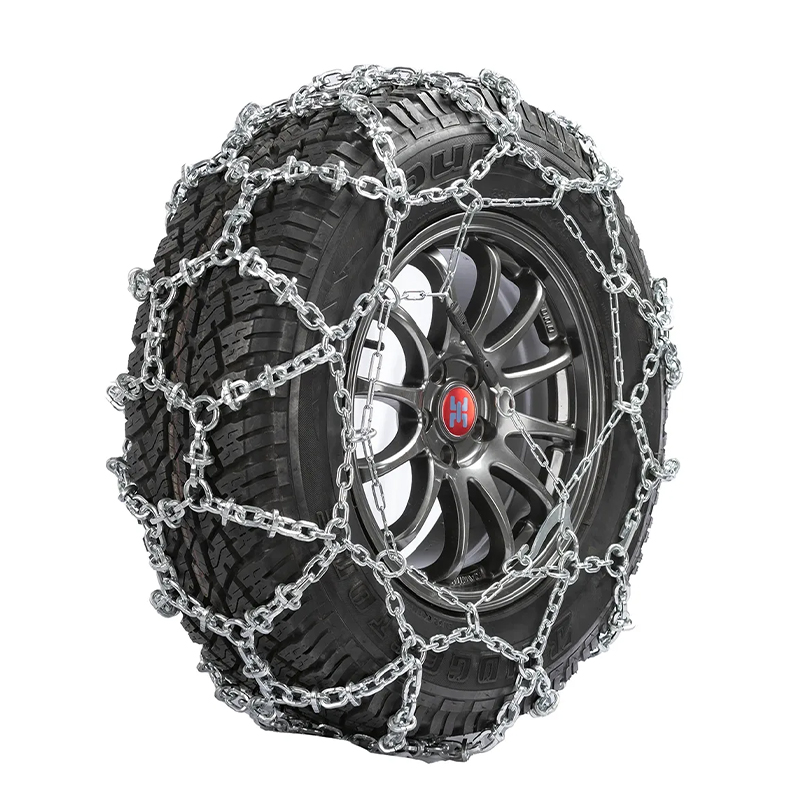
The geometric pattern of chain configurations determines how effectively they distribute force across the tire contact patch. Heavy-duty commercial truck tire chains typically feature reinforced cross-chains that prevent lateral movement and provide multi-directional grip. This prevents the sideways sliding motion that commonly occurs when loaded trucks attempt to navigate curves on icy surfaces. The chains essentially create a mechanical interface that compensates for the reduced friction between rubber and ice.
Braking Distance Reduction
Empirical testing demonstrates that properly installed chains can reduce braking distances by 40 to 60 percent on packed snow, compared to tires without chains. This dramatic improvement occurs because chains prevent wheel lockup, the dangerous condition where brakes are applied with such force that wheels stop rotating while the vehicle continues moving. When wheels lock, the vehicle loses directional control and experiences skidding. Modern braking systems attempt to prevent this through anti-lock brake technology, but chains provide a more fundamental solution by increasing friction so substantially that stopping power improves dramatically even without electronic intervention.
The relationship between applied braking force and actual deceleration becomes more favorable when chains are present. Drivers can apply brakes with greater confidence, knowing that the enhanced traction will translate stopping force into actual deceleration rather than skid. This psychological factor, combined with the physical reality of improved grip, creates compound safety benefits that extend beyond simple stopping distance calculations.
Improving Directional Control and Stability
Beyond braking performance, directional control represents perhaps the most critical safety factor in winter driving. A truck that cannot maintain its intended path becomes a hazard to itself, its cargo, and other road users. Chains address directional control challenges through several mechanisms that work in concert to keep vehicles tracking true.
Preventing Lateral Slipping
Lateral slipping occurs when a vehicle begins moving sideways during cornering or lane changes, typically because insufficient grip exists between tires and road surface. Loaded semi-trucks present particular challenges because their weight and high center of gravity magnify the forces generated during turns. Chains designed for commercial applications incorporate cross-chain elements that resist sideways motion. These cross-links connect the primary circumferential chains and prevent the tire from sliding perpendicular to its intended direction.
Drivers experience the benefit of improved directional control as reduced steering sensitivity and more predictable vehicle response. Rather than requiring constant steering corrections to maintain a desired path, vehicles with properly installed chains respond more directly to steering input. This reduced need for micro-corrections throughout a turn sequence translates to smoother operation and significantly reduced accident risk on slippery surfaces.
Maintaining Stability During Acceleration
Loaded commercial trucks require considerable throttle application when accelerating on slippery surfaces, yet applying power through wheels with insufficient traction simply causes spinning without forward progress. Chains prevent this wheel-spin condition by anchoring the tire securely to the road surface. The improved grip allows drivers to apply necessary engine power without experiencing the frustrating and dangerous spinning sensation that degrades safety and reduces progress.
This stability during acceleration becomes particularly important when merging onto highways or navigating inclines in winter conditions. Drivers can execute these maneuvers with predictable acceleration response rather than the unpredictable behavior of spinning wheels on ice. The psychological benefit of controlled acceleration feeds back into safer overall driving behavior, as drivers maintain confidence in their vehicle's responsiveness.
Types of Truck Tire Chains and Their Applications
Different chain configurations serve specific applications and load requirements. Understanding these variations helps operators select appropriate equipment for their particular circumstances.
Link Chain Designs
Traditional link chains connect individual steel rings in continuous patterns. These designs offer excellent durability and consistent performance across varied snow conditions. The spacing and diameter of links determine how aggressively chains bite into frozen surfaces. Heavier chains with larger links provide superior grip but add weight to wheels, increasing rolling resistance and fuel consumption. This trade-off requires operators to select chains appropriate to their typical conditions rather than always choosing maximum size.
Ladder Chain Configurations
Ladder chains feature crosslinks that run perpendicular to the main direction of travel, creating a pattern resembling a ladder when viewed from above. This design provides exceptional lateral stability and prevents sideways slipping during turns. The cross-member arrangement distributes braking force more evenly across the tire contact patch, reducing the risk of uneven wear and improving safety during cornering. Ladder chains are particularly popular for truck snow chains on heavily loaded vehicles.
Studded and Reinforced Chains
Some chain systems incorporate hardened steel studs or reinforced contact points designed to penetrate particularly hard ice. These enhanced chains provide superior performance in extreme conditions but typically cost more than standard designs. Fleet operators working in regions with consistently severe winters often justify the additional expense based on improved safety outcomes and reduced accident risk.
Proper Installation and Performance Optimization
Even the finest quality chains deliver diminished benefits if installed incorrectly. Proper installation ensures that chains remain secure throughout operation and that traction improvements reach their full potential.
Installation Best Practices
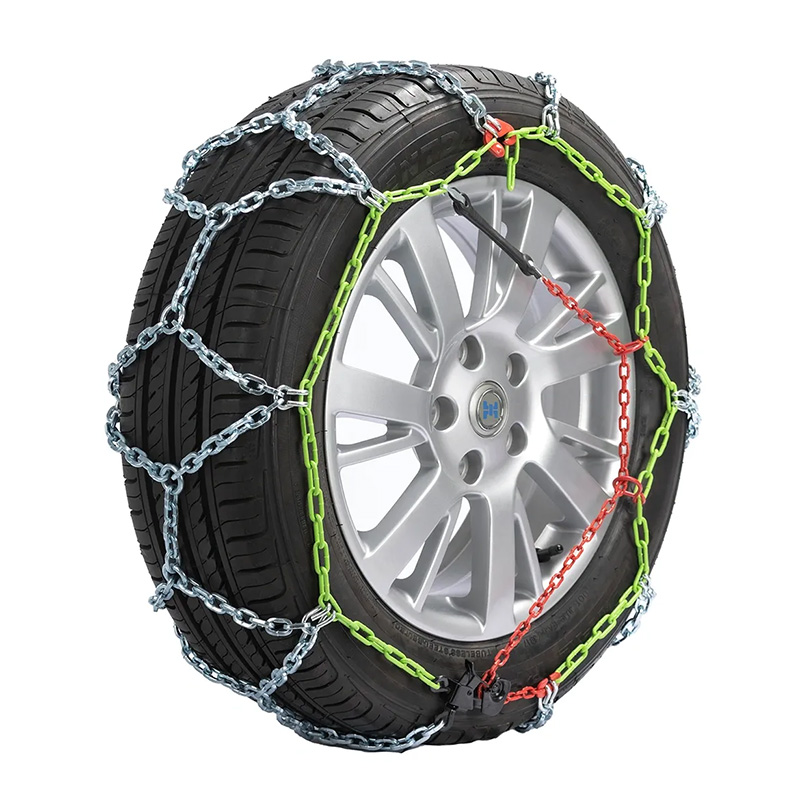
Chains must be sized precisely to match tire diameter and width specifications. Oversized chains create excessive looseness and may cause damage to wheel wells or vehicle undercarriage. Undersized chains cannot properly encompass the tire and will slip or break under load. Manufacturers provide detailed sizing charts that correlate tire dimensions to appropriate chain sizes. Operators should consult these specifications before purchasing or installing chains.
Installation location matters significantly. Chains should be mounted on drive wheels to maximize traction during acceleration and on steering wheels to improve directional control. For tandem rear axle configurations common on semi-trucks, applying chains to one side of both axles (typically the outside wheels) balances traction while avoiding excessive drag from unnecessary chain weight.
Tension and Security
Properly tensioned chains maintain contact with the tire throughout the rotation cycle. Loose chains bounce and vibrate, creating noise and potentially causing damage to the tire or wheel assembly. Chains that are tensioned too tightly can crack under the flexing stress of the tire. Most chain systems include tensioning mechanisms that allow operators to adjust tension after initial installation and periodically during use. Testing chains at low speeds before committing to highway travel verifies proper installation and identifies any problems before they create dangerous situations.
Clearance Verification
Before applying chains to all wheels on a vehicle, drivers should verify that chains clear all wheel well components. Some truck designs have limited space between the tire and the suspension or brake components. Chains can contact these elements as the tire flexes under load, potentially causing damage or creating noise that operators might misinterpret as mechanical problems. Slowly driving forward with chains installed while observing the wheel wells confirms adequate clearance.
Quantifiable Performance Improvements
Scientific testing and real-world experience provide concrete data on how chains improve truck performance in winter conditions.
| Condition | Without Chains | With Chains | Improvement |
|---|---|---|---|
| Braking Distance (packed snow) | 150 feet | 60-90 feet | 40-60% reduction |
| Hill Climbing Traction | Wheel spin present | Secure traction | Eliminates slip |
| Cornering Stability | Significant drift | Minimal drift | Stability enhanced |
| Accident Risk Reduction | Baseline reference | Significantly lower | 50+ percent reduction |
Speed Capability Expansion
Trucks equipped with chains can safely navigate winter roads at speeds that would be dangerous or impossible without chains. While chains allow higher speeds, prudent operators still reduce speeds below posted limits when weather conditions are severe. The improved capability enables reasonable progress while maintaining appropriate safety margins rather than encouraging excessive speeds.
This expanded speed capability translates directly into economic benefits for commercial operations. Drivers can maintain schedules during winter weather, reducing delays and the associated costs of missed delivery windows. Shippers value reliable winter performance, often paying premiums for carriers known to operate safely in harsh conditions. Chains thus become not merely a safety investment but an economic enabler of reliable service delivery.
Maintenance, Storage, and Durability Considerations
Chains require proper care to maintain performance and longevity across multiple seasons of use.
Inspection and Cleaning
After each use, chains should be cleaned of ice, salt, and debris. Accumulated salt accelerates corrosion, while ice buildup adds unnecessary weight and can cause chains to slip. A thorough rinsing with fresh water and air drying removes these contaminants. Visual inspection for bent, cracked, or broken links identifies damage before it compromises safety. Damaged links should be repaired or replaced immediately, as a single failed link can cause entire chain sections to separate.
Storage Practices
Chains should be stored in a dry environment to prevent rust and corrosion. Hanging chains vertically on a wall or storing them loosely in a bin allows air circulation and prevents moisture accumulation. Storage in damp garages or outdoor conditions dramatically reduces chain lifespan. Proper storage practices allow quality chains to remain functional for five to ten years or more, providing years of reliable service across multiple winter seasons.
Lubrication and Rust Prevention
Applying a light coating of protective oil or wax after cleaning and before storage inhibits rust formation. This simple maintenance step, performed annually or every other season, significantly extends chain life. The protective coating creates a barrier against atmospheric moisture and salt residue from roads.
Key Maintenance Reminders
- Clean chains after every use to remove road salt and ice
- Inspect for damage before seasonal storage
- Store in dry location away from moisture
- Apply protective coating annually to prevent corrosion
- Test installation before committing to highway travel
Regulatory Requirements and Legal Considerations
Many jurisdictions require chains or approved alternative traction devices on commercial vehicles during specified winter periods. Understanding these requirements helps operators avoid citations and ensure compliance with local regulations.
Mandatory Chain Requirements
Several states and provinces designate specific periods or weather conditions when chains become mandatory for commercial vehicles traveling designated mountain passes or high-elevation highways. Violation of these requirements can result in substantial fines and operating restrictions. Operators should verify current regulations for all regions where their vehicles operate, as requirements change periodically and vary by location.
Approved Alternative Traction Devices
Some jurisdictions recognize alternative traction systems that provide performance equivalent to traditional chains. These alternatives, such as tire cover systems or friction-enhancement devices, must meet specific performance standards established by regulatory bodies. Operators considering alternatives should verify that their equipment meets requirements in all jurisdictions where their vehicles operate.
Documentation and Compliance
Professional operators should maintain documentation demonstrating that appropriate traction devices are carried and available for deployment. Fleet companies often establish policies requiring chains to be installed and tested before vehicles enter high-risk areas during winter months. This proactive approach prevents equipment-related delays and demonstrates professional commitment to safety.
Economic Analysis of Chain Investment
While chains represent an additional operating cost, their safety and economic benefits generally justify the expense for commercial operators.
Cost-Benefit Calculations
Quality chains suitable for heavy-duty truck applications cost between 200 and 800 dollars per set, depending on size, material quality, and design sophistication. This single investment provides years of service if properly maintained. When compared to the costs of a single accident including vehicle damage, cargo loss, insurance increases, and potential liability claims, chains represent a remarkably cost-effective safety investment. Many fleets recover the cost of chains through reduced insurance premiums and improved safety records.
Productivity Gains
Chains enable trucks to maintain productive schedules during winter months when unchained vehicles would be unable to operate safely. This capability represents significant economic value for carriers serving regions with substantial winter weather. The ability to complete deliveries on schedule during winter conditions creates competitive advantages and customer loyalty that translate into revenue premiums.
Insurance and Liability Considerations
Insurance companies recognize the risk-reduction benefits of properly installed chains and may offer premium reductions for fleets that demonstrate consistent winter readiness. Conversely, accidents occurring when chains were readily available but not deployed may influence claim settlements or premium calculations. Operators should verify insurance policy terms related to chain requirements and maintenance.
Chains Versus Alternative Solutions
While chains remain the most effective traction enhancement for trucks, other solutions exist. Understanding the alternatives helps operators make informed decisions about winter readiness.
Winter Tires
Specialized winter tire compounds maintain flexibility at cold temperatures better than standard all-season tires, providing improved traction on snow and ice. However, winter tires cannot match the braking distance improvements and traction enhancement that chains provide. Winter tires work best when combined with chains rather than as a substitute. Many professional operators use winter tires plus chains to optimize performance across varying winter conditions.
Studded Tires
Studded tires incorporate metal spikes that penetrate ice, providing performance approaching that of chains. However, studded tires are prohibited in many regions due to road damage concerns, and their performance remains inferior to chains on packed snow. The upfront cost of studded tires also exceeds that of chains, making chains the more economical choice for most commercial operators.
Electronic Traction Control Systems
Modern trucks increasingly incorporate electronic traction control that modulates brake pressure and engine throttle to prevent wheel slipping. These systems provide meaningful improvements over uncontrolled operation, but they cannot compensate for fundamental grip limitations when tires lack adequate traction. Electronic systems work best in conjunction with chains and winter tires rather than as standalone solutions.
Best Practices for Winter Chain Operations
Experienced operators have developed proven approaches that maximize the safety and performance benefits chains provide.
Pre-Season Preparation
Before winter weather arrives, operators should inspect chains, verify proper storage conditions, and practice installation procedures. Installing chains in cold weather during an actual storm is stressful and time-consuming. Practicing installation in favorable conditions builds confidence and identifies any problems with fit or technique before they matter. Many operators find that a 15-minute practice session in autumn prevents frustrating delays during winter storms.
Proactive Installation Strategy
Rather than waiting until conditions become hazardous to install chains, experienced drivers install them as soon as snow accumulates on pavement. This proactive approach maintains superior traction from the beginning of adverse weather rather than attempting risky driving without chains and then stopping to install them. The small investment of time to install chains during safe conditions at the first sign of snow prevents much larger time investments later.
Conservative Speed Management
While chains dramatically improve performance, they do not eliminate all winter driving risks. Wise operators maintain conservative speeds even with chains installed, adjusting velocity to match visibility and surface conditions. Chains improve capability but do not confer invulnerability. Operating with appropriate humility regarding winter weather hazards keeps trucks moving safely and reliably.
Continuous Monitoring
During extended winter operations, chains should be inspected periodically for damage or loosening. Stopping for brief inspections every few hours allows operators to check tension and identify any problems requiring attention. This ongoing vigilance prevents surprise failures and ensures consistent performance throughout long winter journeys.
Frequently Asked Questions
Q1: How do I know if chains are the right solution for my truck?
Chains are particularly valuable for trucks that operate in regions experiencing significant snow and ice accumulation. If you regularly transport cargo during winter months or navigate mountain passes, chains become an essential safety investment. Operators should verify whether chains are legally required in their region and consider whether the improved performance justifies the equipment cost and installation time. Commercial operators almost always find chains cost-effective compared to the risks of uncontrolled winter operation.
Q2: Can I leave chains installed permanently during winter?
While continuous installation maximizes traction, it also increases wear on chains and creates unnecessary rolling resistance during periods of clear pavement. Many operators install chains only when snow is actively accumulating or when forecasts indicate imminent winter weather. This balances traction benefits against unnecessary wear and fuel consumption penalties. Experienced drivers develop feel for when conditions justify continuous chain deployment.
Q3: What is the speed limit when driving with chains installed?
While chains enable higher speeds than would be possible without them, regulations in many areas limit speeds to 25 to 35 miles per hour when chains are deployed. These limits exist because chains add mass to wheels and create additional stress on drive components. Operators should verify speed regulations in jurisdictions where they operate and observe these limits for both legal compliance and vehicle longevity.
Q4: Do chains damage roads or surrounding infrastructure?
Properly installed chains cause minimal damage to road surfaces. However, aggressive chains used extensively on dry pavement can contribute to accelerated wear. This concern has motivated regulatory requirements limiting studded tires in some regions but generally does not restrict traditional chain use. Road agencies understand that chains prevent accidents, which cause far greater damage than the minimal abrasion chains create.
Q5: How do chains affect fuel consumption?
Chains increase rolling resistance and wheel mass, which typically increases fuel consumption by 5 to 10 percent. However, the improved traction may reduce travel time and allow more reliable schedules, offsetting fuel consumption increases. For commercial operators, the safety and reliability benefits generally outweigh modest fuel consumption penalties. The economic equation changes if chains remain installed for extended periods on clear pavement.
Q6: Are there weight or size restrictions on chains?
Chains must match tire size specifications, but no inherent weight limits exist for trucks using chains. Commercial trucks regularly operate with chains installed while carrying full loads. Operators should verify that chain weight does not push loaded vehicles above legal weight limits in their jurisdiction, though this is rarely a practical concern given modern truck capacity.
Q7: How often should chains be replaced?
Quality chains properly maintained typically last five to ten years or longer. Replacement becomes necessary when links crack, break, or show excessive corrosion preventing proper tension maintenance. Some operators choose to replace chains every few years regardless of condition as a preventive maintenance approach, though regular inspection typically identifies replacement needs well in advance.
Q8: Can passenger vehicles use the same chains as trucks?
Chains must be sized appropriately for specific tire dimensions. Passenger vehicle tire sizes differ substantially from truck tire sizes, so chains must be selected accordingly. Attempting to use truck chains on passenger vehicles creates safety hazards and potential vehicle damage. Always select chains specifically designed for your vehicle type and tire size.
Q9: What should I do if a chain breaks during operation?
If a chain breaks while driving, move safely to the side of the road and stop. Do not attempt to remove the broken chain while on a roadway where traffic poses hazards. Remove or secure the broken chain to prevent it from damaging the vehicle. Install a spare chain if available, or operate without chains if no replacement is available. Modern vehicles can generally operate safely without chains when drivers reduce speed appropriately for conditions.
Q10: Are there climate-related reasons to use chains even in regions without snow?
Chains are designed specifically for snow and ice traction. On dry pavement, they provide no traction advantage and primarily create rolling resistance and noise penalties. Regional climate and typical winter conditions determine whether chains make economic and practical sense. Operators in regions rarely experiencing snow generally do not need chains, though emergency chains might be carried for unexpected severe weather.
Conclusion
Truck tire chains represent proven technology that dramatically enhances braking performance and directional control in winter conditions. By creating multiple mechanical contact points between tires and road surfaces, chains penetrate snow and ice to provide grip levels unattainable with tires alone. The physical improvements translate directly into measurable reductions in braking distances, eliminated wheel slip during acceleration, and enhanced stability during cornering.
For commercial operators serving winter-weather regions, truck tire chains constitute essential safety equipment that improves outcomes while enabling reliable schedule maintenance. The economic benefits of accident prevention, schedule reliability, and potential insurance premium reductions generally justify the modest equipment costs and installation effort required. Professional operators recognize that winter readiness depends on adequate preparation, and chains remain the most reliable method of achieving the traction enhancements necessary for safe winter trucking operations.