English
 Español
 Deutsch
 日本語
日本語The Core Problems Solved by Tire Chains for Trucks
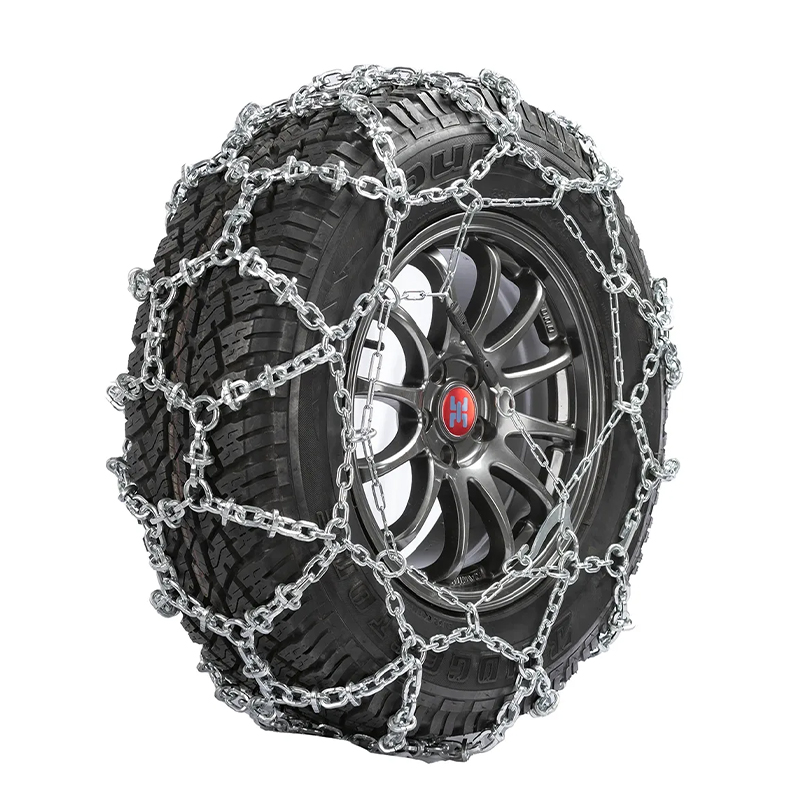
Truck tire chains directly solve three critical operational threats: loss of traction on ice or packed snow, inability to meet legal chain-up requirements in mountain passes, and catastrophic cargo shifts caused by unplanned slides. Beyond these, they reduce emergency tow costs, lower the risk of jackknife accidents, and keep delivery schedules intact when winter weather hits. In short, tire chains turn an undrivable road into a route you can safely navigate at reduced speeds.
Primary Traction Failure on Snow and Ice
The most obvious problem tire chains solve is the complete lack of grip on frozen surfaces. At 0 degrees Celsius and below, standard all-season or even winter-rated truck tires can lose up to 60 percent of their surface friction compared to dry asphalt. This means a fully loaded 40-ton tractor-trailer cannot start, stop, or turn reliably.
Chains dig into the ice through aggressive metal cross-links, creating mechanical interlock. Testing shows that proper ladder-style chains can increase tractive force by 150 to 200 percent on glare ice compared to studded winter tires alone. For example, on a 6 percent gradient, a chained drive axle can maintain forward motion while an unchained axle will spin out within seconds.
Steering and Braking Control
Steering axles fitted with chains restore directional stability. Braking distance on ice can be cut by nearly half from about 300 feet to roughly 160 feet at 25 miles per hour when front tires are chained. This directly prevents rear-end collisions and roadside departures.
Legal Chain Requirements and Road Closures
Across North America and Europe, highway authorities enforce chain laws during winter storms. Over 35 states in the US and all Canadian provinces have chain-up zones where commercial vehicles must carry and install chains when signs are displayed. Failing to comply results in fines starting at 500 dollars and can go above 1,500 dollars per axle, plus potential out-of-service orders.
Tire chains solve the legal compliance problem instantly. Without them, you are forced to wait out the storm, detour hundreds of miles, or risk a violation that goes on your DOT record. Having chains installed correctly allows you to pass through chain-control checkpoints without delay, keeping your freight moving and your CSA score clean.
Mountain Pass and Steep Grade Navigation
Mountain passes like the Rockies, Sierras, and Alps are notorious for sudden ice. Grade angles of 6 to 8 percent are common, and at those slopes, an unchained truck will slide backward or jackknife. Tire chains provide the longitudinal grip needed to ascend and the retarding grip to descend safely, eliminating the problem of being stranded mid-grade.
Cargo Stability and Load Protection
Sudden wheel slip does not just affect driving, it shocks the entire cargo compartment. Uncontrolled wheel spin creates violent torsional forces that can shift palletized goods, damage sensitive machinery, or tip unbalanced loads. Tire chains smooth out power delivery by preventing abrupt wheel slip, so the driveline applies torque more evenly.
For flatbed and step-deck haulers, cargo shift is a top safety concern. Chains reduce the risk of load shift by up to 70 percent on icy roads because the vehicle maintains a steady directional path rather than fishtailing. This protects both the freight value and the driver's liability.
Emergency Recovery and Tow Prevention
When a truck is stuck in a snowbank or on an icy shoulder, recovery costs are exorbitant. Average heavy-duty tow and recovery fees range from 800 to 2,500 dollars per incident, not counting cargo delay penalties. Tire chains solve this by giving the driver the ability to self-recover in many situations. Simply chaining up the stuck axle and gently rocking the vehicle can extract it from shallow snow or ice ruts.
Moreover, preventative chaining before entering a risky section reduces the chance of a tow-required breakdown by nearly 90 percent according to fleet maintenance logs. This keeps the truck on the road and out of the service bay.
Operational Efficiency and Schedule Reliability
Weather delays cost the trucking industry billions annually. Fleets that mandate chains when road temperatures drop below freezing report 40 percent fewer weather-related late deliveries. Tire chains solve the schedule-killing problem of waiting out the weather by turning marginal roads into passable routes.
Consider a typical 1,200-mile winter route: without chains, a driver may lose 4 to 6 hours waiting for plows or conditions to improve. With chains, they can maintain a safe 25 to 35 miles per hour pace through affected areas, reducing total trip time loss to under 2 hours. This directly impacts revenue per mile and driver hours-of-service compliance.
Types of Truck Tire Chains and Their Specific Solutions
Not all chains solve the same problems equally. Below is a quick reference to match chain type to the specific issue you face:
| Chain Type | Primary Problem Solved | Best Use Case |
| Ladder (cable) chains | Light ice and packed snow; legal compliance | Highway running, rolling hills |
| Link (twisted) chains | Deep snow, severe ice, steep grades | Mountain passes, off-highway logging |
| Diamond-pattern chains | Even wear, reduced vibration, cargo protection | Long-haul winter routes, fragile freight |
| V-bar chains | Extreme ice, emergency traction | Emergency vehicles, steep oilfield roads |
Choosing the right type ensures you solve the traction problem without damaging tires or creating excessive road wear.
Decision Flow: When to Install Tire Chains
Flow: Answering yes to any of the three conditions means chains are strongly recommended or required. This simple decision tree prevents guesswork and keeps drivers safe.
Frequently Asked Questions (FAQ)
Do tire chains damage my truck tires?
Properly fitted chains with rubber tensioners cause negligible wear on modern radial tires. Damage occurs only when chains are loose or driven over 30 miles per hour, so correct installation and speed discipline solve that problem.
How long does it take to install truck tire chains?
With practice, a single axle can be chained in 10 to 15 minutes. Fleets report that pre-adjusted chains cut installation time by 40 percent, reducing cold exposure and roadside risk.
Can I use chains on all axles?
Typically, drive axles are mandatory; steering axles may be optional but highly recommended for control. Chaining all driven axles provides maximum tractive benefit, especially on grades.
Are cable chains sufficient for heavy ice?
Cable chains solve light-to-moderate ice and snow. For severe ice or steep gradients, link or V-bar chains are 50 to 70 percent more effective at preventing slip.
What is the legal speed limit with chains?
Most jurisdictions cap chain speed at 25 to 30 miles per hour. Exceeding this not only risks chain breakage but also voids the traction benefit, so compliance is both legal and practical.