English
 Español
 Deutsch
 日本語
日本語Winter brings a unique set of challenges to the trucking industry. Snow-covered highways, icy mountain passes, freezing rain, and rapidly changing weather conditions all combine to reduce traction and increase stopping distances. For heavy trucks that carry substantial loads, these conditions are not merely inconvenient—they can be dangerous. This is why tire chains for trucks remain an essential winter traction solution in many regions around the world.
The Winter Traction Challenge for Trucks
Trucks differ significantly from passenger vehicles in weight, size, and driving dynamics. While increased weight can sometimes improve traction, it also increases inertia, making braking and steering far more difficult on icy surfaces.
Key winter traction challenges for trucks include:
- Reduced friction between tires and icy or packed-snow surfaces
- Longer braking distances due to vehicle mass
- Difficulty climbing or descending grades
- Loss of steering control on curves or uneven terrain
Standard rubber tires, even those designed for winter use, can struggle when temperatures drop below freezing and road surfaces become polished by traffic. At this point, mechanical traction becomes necessary. Tire chains for trucks address this need directly by creating a physical grip between the tire and the road surface.
How Tire Chains for Trucks Improve Winter Safety
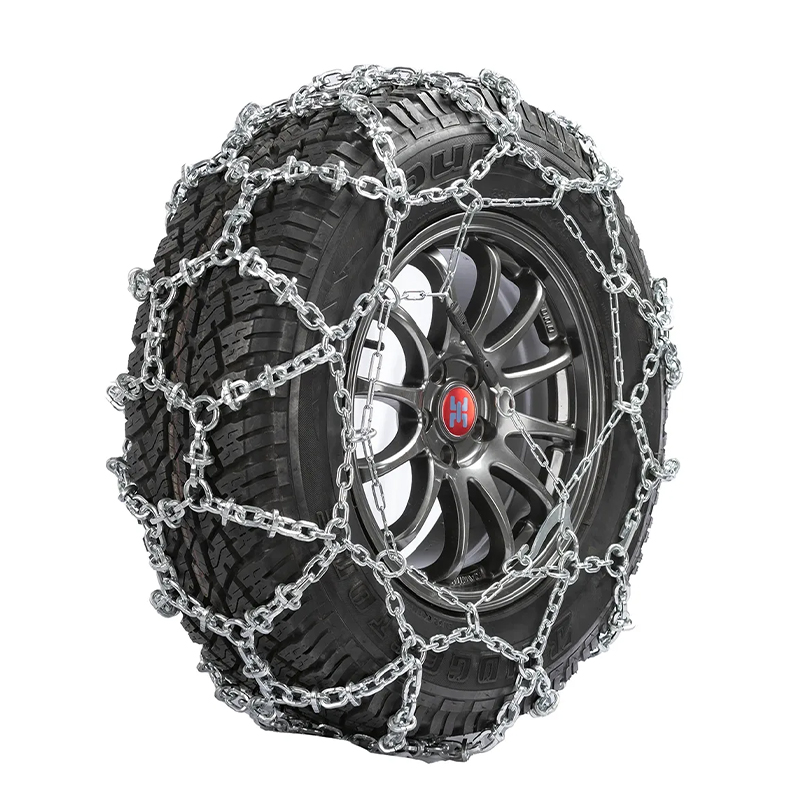
Tire chains are traction devices fitted around truck tires to increase grip on snow and ice. Unlike tire compounds that rely on friction alone, chains use metal cross links to bite into slippery surfaces.
Mechanical Advantage on Ice and Snow
On ice, rubber tires can slide because the surface is too smooth to generate sufficient friction. Tire chains introduce metal edges that:
- Break through ice layers
- Compress snow for better contact
- Reduce lateral slipping during turns
This mechanical interaction significantly improves control, particularly at low speeds where trucks must maneuver safely through steep inclines or tight turns.
Enhanced Braking Performance
Stopping a loaded truck on ice can be one of the most dangerous winter scenarios. Tire chains shorten braking distances by maintaining consistent contact with the road, reducing the risk of jackknifing or uncontrolled sliding.
Stability Under Load
Heavy cargo amplifies the consequences of traction loss. Tire chains help distribute traction forces more evenly across the tire, improving stability even when carrying uneven or shifting loads.
Regulatory and Operational Drivers
In many regions, winter driving regulations require trucks to carry or install tire chains during specific months or weather conditions. These requirements are not arbitrary; they reflect real-world safety concerns.
From an operational perspective, tire chains for trucks also help maintain delivery schedules. Instead of halting operations during snowstorms, fleets equipped with proper traction devices can continue moving safely, reducing downtime and economic losses.
Key Design Features That Matter
Not all tire chains are designed the same. For trucks operating in demanding winter environments, certain structural features significantly impact performance and durability.
Core Product Features
Features:
Ladder Type Cross Chain
Twist Links for Smooth Driving
Better Performance and Longer Life
These features address both traction efficiency and driver comfort. Ladder type cross chains provide consistent contact across the tire width, while twist links reduce vibration and noise compared to bulkier chain designs. Together, they support smoother driving without sacrificing grip.
Understanding Ladder Type Cross Chain Construction
Ladder type cross chains are among the most commonly used designs for truck applications. In this structure, cross chains run perpendicular to the direction of travel, connecting two side chains.
Advantages of Ladder Type Design
- Predictable traction on straight roads
- Easy installation and removal
- Balanced distribution of load across the tire
For highway trucks and regional transport vehicles, ladder type cross chains offer reliable performance without excessive complexity.
The Role of Twist Links in Driving Comfort
Traditional square links can provide aggressive traction but often cause excessive vibration, which leads to driver fatigue and accelerated wear on tires and suspension components.
Twist links, by contrast:
- Sit flatter against the tire tread
- Reduce road noise
- Minimize vibration at low to moderate speeds
This makes them particularly suitable for long-haul trucks that must travel extended distances in winter conditions.
Durability and Service Life in Harsh Environments
Winter road conditions are not only slippery but also abrasive. Sand, salt, and gravel used for road treatment can accelerate wear on traction devices.
High-quality tire chains for trucks are designed to withstand:
- Repeated freeze-thaw cycles
- Abrasion from treated road surfaces
- Heavy loads over extended periods
Better performance and longer life are not only cost benefits; they also reduce the risk of chain failure during operation, which could otherwise cause tire damage or loss of control.
Product Comparison by Functional Attributes
The following table outlines key functional attributes commonly evaluated when selecting tire chains for trucks:
| Attribute | Functional Role | Operational Benefit |
|---|---|---|
| Cross Chain Design | Provides direct contact with road | Improved traction on snow and ice |
| Link Structure | Determines vibration and noise | Smoother driving experience |
| Material Strength | Resists wear and breakage | Longer service life |
| Installation Simplicity | Affects deployment speed | Reduced downtime in severe weather |
| Load Compatibility | Supports vehicle weight | Stable performance under heavy loads |
This type of evaluation helps operators choose solutions aligned with their specific winter driving conditions.
Where Tire Chains Are Most Effective
While tire chains are invaluable in extreme winter conditions, they are not intended for all road surfaces.
Ideal Use Scenarios
- Snow-packed mountain roads
- Icy highways during storms
- Steep inclines and descents
- Rural or less-maintained routes
On dry pavement, chains should be removed to prevent unnecessary wear and potential road damage. Proper use ensures maximum effectiveness and longevity.
Integrating Tire Chains into Winter Preparedness
Tire chains should be considered part of a broader winter readiness strategy rather than a standalone solution.
Supporting Practices Include:
- Driver training on installation and removal
- Regular inspection before winter season
- Proper storage to prevent corrosion
- Clear operational guidelines for when chains should be deployed
When combined with winter tires and cautious driving practices, tire chains for trucks significantly enhance safety and reliability.
Economic and Safety Impact
The cost of winter-related accidents, delays, and vehicle damage can far exceed the investment in proper traction equipment. Tire chains help reduce:
- Accident risk
- Insurance claims
- Delivery disruptions
- Maintenance costs associated with skidding incidents
From both safety and economic perspectives, tire chains remain a practical and proven solution for winter trucking operations.
Conclusion
Winter conditions present serious challenges for trucks, where traction loss can quickly escalate into dangerous situations. Tire chains for trucks provide a reliable, mechanical solution to improve grip, stability, and control on snow and ice. Through thoughtful design elements such as ladder type cross chains, twist links for smooth driving, and construction aimed at better performance and longer life, tire chains remain an essential component of winter safety strategies.
Used correctly and integrated into a comprehensive winter preparedness plan, tire chains help ensure that trucks can operate safely, efficiently, and responsibly throughout the harshest months of the year.
FAQ
Q1: When should tire chains for trucks be installed?
Tire chains should be installed when roads are covered with snow or ice and traction is insufficient for safe driving, especially on steep or unmaintained routes.
Q2: Do tire chains damage truck tires?
When properly sized, installed, and used only on appropriate surfaces, tire chains do not damage tires. Prolonged use on dry pavement should be avoided.
Q3: Are ladder type cross chains suitable for long-distance driving?
They are suitable for winter conditions at controlled speeds, offering reliable traction and relatively easy installation, especially when combined with twist links.
Q4: How long do tire chains typically last?
Service life depends on usage conditions, road surfaces, and maintenance practices. Designs focused on better performance and longer life can withstand multiple winter seasons.
Q5: Can tire chains replace winter tires?
Tire chains are a supplement, not a replacement. They are most effective when used alongside appropriate winter tires and safe driving practices.