English
 Español
 Deutsch
 日本語
日本語What is G43 High Test Chain?
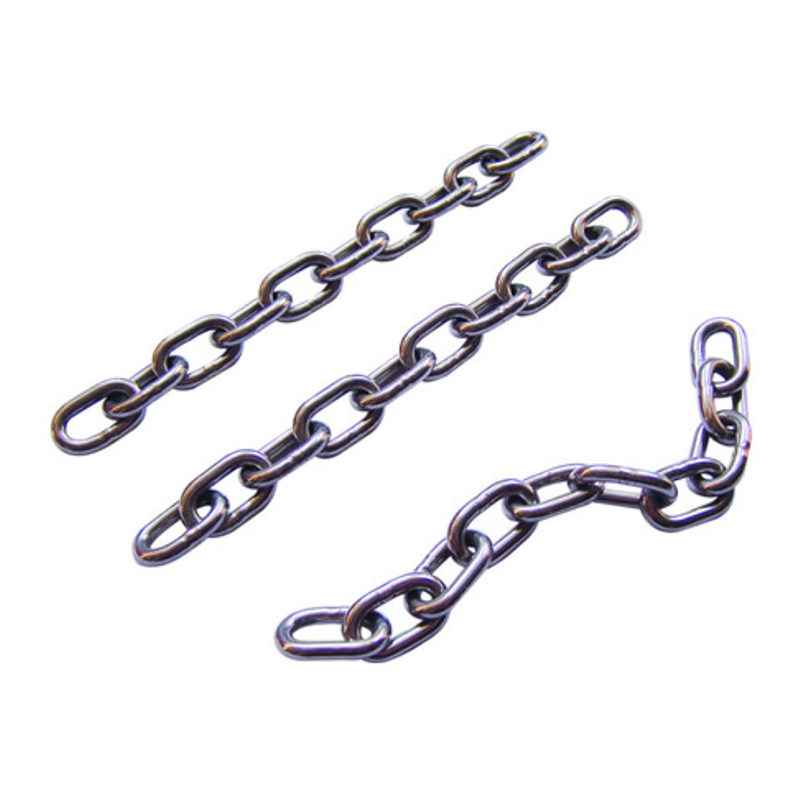
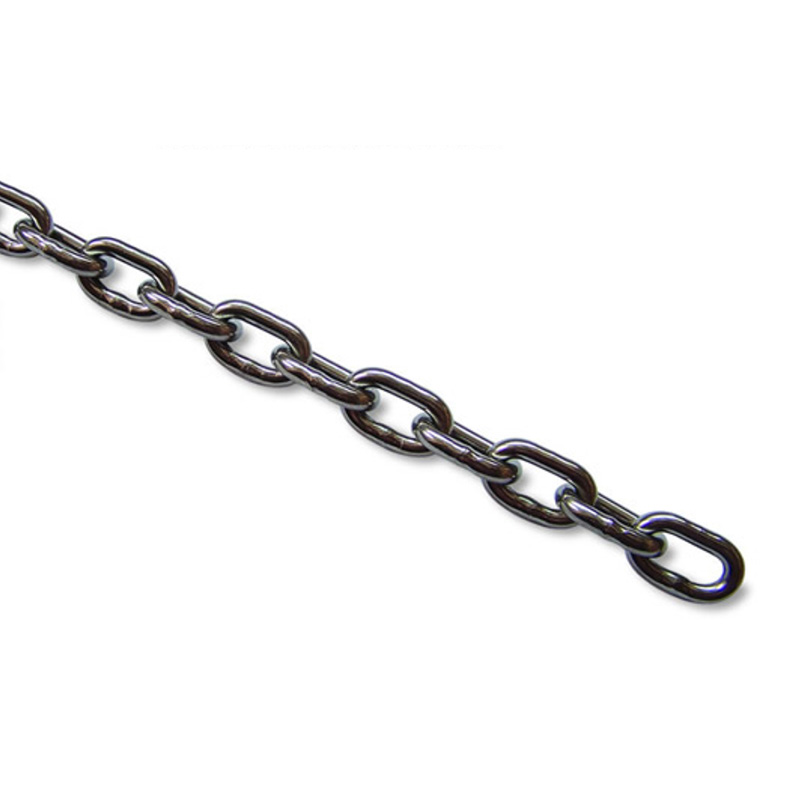
G43 high test chain, also known as Grade 43 or G4 chain, represents a premium class of high-carbon steel chain engineered for demanding applications where strength and reliability are non-negotiable. Unlike lower-grade alternatives, G43 chain delivers approximately 35% greater tensile strength compared to Grade 30 chain, making it the preferred solution for marine anchoring, heavy-duty towing, cargo securement, and industrial lifting operations.
The designation "G43" and "G4" are often used interchangeably across the industry, though G43 is the more precise technical term. This high-performance chain is manufactured to meet rigorous NACM (National Association of Chain Manufacturers) standards and undergoes proof testing to ensure each link meets or exceeds specified breaking strength requirements. The high-carbon steel composition delivers superior load-bearing capacity while maintaining the flexibility necessary for dynamic applications.
When purchasing G43 high test chain, buyers can expect consistent quality, reliable performance, and certified compliance with industry safety standards. The chain's versatility across maritime, construction, forestry, and transportation sectors has established it as the benchmark for mid-to-high strength chain applications.
G43 High Test Chain Specifications and Sizing Chart
The specifications of G43 chain vary significantly based on nominal size, directly affecting working load limits, breaking strength, and application suitability. The following comprehensive chart presents the most common sizes available in the market, along with their corresponding structural and performance characteristics.
| Nominal Size (inches) | Working Load Limit (WLL) lbs | Breaking Strength (lbs) | Inside Length (inches) | Weight per Foot (lbs) |
|---|---|---|---|---|
| 1/4 | 3,150 | 12,600 | 0.71 | 0.42 |
| 5/16 | 4,700 | 18,800 | 0.84 | 0.66 |
| 3/8 | 6,300 | 25,200 | 1.0 | 1.04 |
| 7/16 | 8,400 | 33,600 | 1.17 | 1.41 |
| 1/2 | 10,600 | 42,400 | 1.33 | 1.85 |
All specifications comply with NACM standards and are proof tested to ensure reliability. Working Load Limit represents the safe working load under normal conditions; actual breaking strength exceeds WLL by a safety factor of 4:1.
Understanding NACM Compliance and Proof Testing
NACM (National Association of Chain Manufacturers) standards establish the foundation for chain quality and safety across North America. When a G43 chain is certified NACM compliant, it means the product has been manufactured according to stringent specifications covering material composition, dimensional accuracy, and load-bearing capacity. Each chain is subjected to proof testing, where individual links are stressed to a predetermined load without permanent deformation or failure.
This certification process provides buyers with confidence that the chain they receive will perform consistently under specified conditions. Proof tested G43 chain carries an implicit guarantee of quality that extends beyond simple material verification—it represents validated structural integrity.
G43 vs. Grade 30 vs. Grade 70: Choosing the Right Chain for Your Application
The chain grading system reflects material composition and resulting performance characteristics. Understanding the distinctions between G43, Grade 30, and Grade 70 enables informed purchasing decisions tailored to specific operational demands.
Grade 30 Chain: Entry-Level Performance
Grade 30 represents the baseline for general-purpose chain applications. It is constructed from lower-carbon steel, resulting in reduced tensile strength but improved corrosion resistance in certain environments. Grade 30 chain typically exhibits a working load limit approximately 70% lower than equivalent G43 specifications, making it suitable for light to moderate duty applications such as non-critical securing, general rigging, and applications where cost represents the primary constraint.
G43 Chain: The Sweet Spot for Heavy Duty
G43 high test chain occupies the optimal performance zone for demanding applications. The high-carbon steel composition delivers strength approximately 35% greater than Grade 30 while maintaining superior corrosion resistance compared to higher-grade alternatives. This balance makes G43 the preferred choice for marine anchoring, heavy towing operations, load securement, and industrial applications where both strength and durability are essential. G43 chain resists rust formation better than grade 70 due to lower carbon content, extending service life in coastal and corrosive environments.
Grade 70 Chain: Maximum Strength
Grade 70 represents the highest-strength chain option available in standard categories. With significantly elevated carbon content, G70 chain delivers working load limits roughly 65% higher than equivalent G43 specifications. However, this strength advantage comes with a trade-off: the high-carbon composition makes G70 more susceptible to rust and corrosion, particularly in marine environments. Grade 70 is reserved for specialized applications where maximum load capacity justifies the increased maintenance requirements and higher cost.
Comparative Performance Matrix
- Grade 30: Best for cost-sensitive, light-duty applications where occasional use and non-critical load-bearing are acceptable.
- G43: Optimal for most commercial and industrial applications requiring reliable strength-to-corrosion-resistance balance.
- Grade 70: Essential when maximum tensile strength is non-negotiable despite higher corrosion risk and maintenance demands.
Surface Finishes: Hot Dip Galvanized, Electro Galvanized, and Self Colored
The protective finish applied to G43 chain fundamentally influences its durability, aesthetic appearance, and suitability for specific environmental conditions. Three primary finish options serve distinct operational requirements.
Hot Dip Galvanized Finish
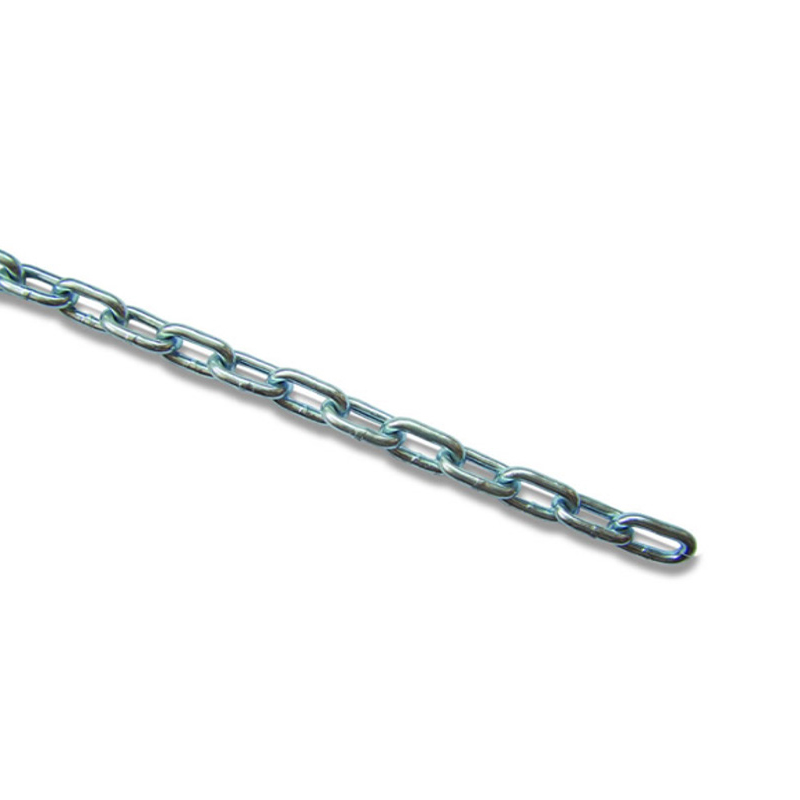
Hot dip galvanizing involves immersing chain in molten zinc, creating a thick, adherent coating that provides exceptional corrosion resistance. This finish is characterized by a silvery-gray appearance with a somewhat textured surface. Hot dip galvanized G43 chain excels in marine environments, coastal applications, outdoor storage, and any scenario involving prolonged exposure to moisture, salt spray, or humid conditions. The coating thickness typically ranges from 45 to 85 microns, providing durability measured in decades rather than years. This finish is the industry standard for anchor chain, maritime rigging, and critical marine applications.
Electro Galvanized Finish
Electroplating deposits a thinner, more uniform zinc coating through electrical current application. Electro galvanized chain presents a brighter, more aesthetically refined appearance compared to hot dip galvanized alternatives. This finish provides moderate corrosion protection suitable for general industrial environments, interior applications, and scenarios where appearance considerations matter. Electro galvanized G43 chain offers adequate protection for non-marine industrial operations and is frequently selected when finished appearance influences purchasing decisions. The coating is typically 10 to 20 microns thick, providing protection sufficient for most indoor and controlled environments.
Self Colored Finish
Self colored (or black) G43 chain retains its natural steel appearance without protective coating. This finish is selected for applications where cost minimization takes priority, appearance is irrelevant, and environmental exposure is minimal or manageable through operational practices. Self colored chain is commonly used in construction rigging, temporary load securement, towing applications where regular replacement is anticipated, and interior industrial uses. This finish offers no inherent corrosion protection and requires regular maintenance or replacement in corrosive environments.
| Finish Type | Corrosion Resistance | Appearance | Ideal Applications | Relative Cost |
|---|---|---|---|---|
| Hot Dip Galvanized | Excellent | Silver-gray, textured | Marine, coastal, outdoor | Higher |
| Electro Galvanized | Good | Bright, uniform | General industrial, visible installations | Medium |
| Self Colored | None | Black steel | Temporary use, construction, interior | Lower |
Common Applications and Critical Safety Information
Primary Applications for G43 Chain
- Anchor Chain: Marine vessels rely on hot dip galvanized G43 chain for anchoring systems, where corrosion resistance and strength are paramount.
- Towing and Recovery: Heavy-duty towing applications utilize G43 chain for reliable load transfer, particularly in automotive recovery and industrial towing.
- Load Securement: Cargo securing, equipment tie-down, and load restraint systems depend on G43 chain's predictable strength characteristics.
- Logging and Forestry: Timber handling and log transport operations employ G43 chain for its durability under demanding field conditions.
- Industrial Rigging: Temporary rigging, equipment positioning, and non-overhead load handling benefit from G43 chain's strength and reliability.
- Dock and Port Operations: Maritime handling and cargo operations utilize G43 chain for its superior marine corrosion resistance.
Critical Safety Warning: NOT FOR OVERHEAD LIFTING
G43 high test chain is NOT suitable for overhead lifting of personnel or critical loads. Chain used in overhead lifting applications requires specific design characteristics, certification through OSHA-compliant testing, and documented proof of safe working load capacity. Attempting to use standard G43 chain for overhead lifting violates safety regulations and creates severe injury risk. Always consult applicable regulations and use equipment specifically rated and certified for overhead lifting. This warning is mandatory and non-negotiable for operator safety.
Proper Load Assessment Methodology
Before implementing G43 chain in any application, establish the actual load requirement and compare it against the chain's working load limit. Multiply the maximum anticipated load by an appropriate safety factor—typically 4:1 for dynamic loads and 3:1 for static loads. Ensure the calculated required capacity remains below the chain's rated working load limit. Environmental factors including temperature extremes, corrosive exposure, and load dynamics must all be factored into capacity calculations.
G43 Chain Application Scenarios: Visual Guide
Purchasing G43 High Test Chain: Specifications and Lead Times
Critical Information for Accurate Quotation
When requesting pricing for G43 chain, provide the following information to ensure accurate quotes and timely delivery:
- Nominal Size: Specify exact diameter (1/4", 5/16", 3/8", 7/16", 1/2", or custom size if required)
- Length Requirement: Indicate total length needed, whether as single coils, spools, or continuous lengths
- Surface Finish: Specify hot dip galvanized, electro galvanized, or self colored
- Quantity: Provide anticipated order volume to enable volume-based pricing
- Delivery Timeline: Clarify required delivery date and whether expedited availability is needed
- Certification Requirements: Indicate whether NACM certification or additional testing documentation is required
- End Connections: Specify whether clevis hooks, shackles, or other connection hardware are required
Inventory and Availability
Standard G43 chain sizes in common finishes are typically maintained in inventory, enabling rapid order fulfillment. Most standard orders ship within 24 hours of confirmation. Custom lengths, unusual sizes, or specialized finishes may require additional lead time. Rush delivery options are available for time-sensitive applications, though expedited processing incurs premium charges. Inquire about current stock levels when requesting quotes to determine optimal fulfillment timelines for your specific requirements.
Quality Assurance and Certification
All G43 chain supplied meets or exceeds NACM standards and includes proof testing documentation. Chain is supplied with test certificates indicating working load limit, breaking strength, and inspection results. For applications requiring enhanced documentation or specialized testing, additional certificates of conformance can be provided. Traceability documentation enables verification of material composition and manufacturing batch information for critical applications or regulatory compliance requirements.
Expert Tip: Stock Strategically
Organizations that maintain emergency inventory of common G43 sizes (typically 3/8" and 1/2") eliminate downtime risks and ensure operational continuity. Even small quantities reserved for urgent needs represent excellent risk mitigation. Consider establishing inventory agreements with suppliers to maintain strategic stock levels without capital commitment.
Request a Quote for G43 High Test Chain
Ready to source G43 high test chain for your application? Provide your specifications and procurement requirements to receive detailed, competitive pricing tailored to your exact needs.
Get Pricing for Your G43 Chain Requirements
Provide your size, finish, quantity, and delivery timeline for immediate quote response
What Happens Next
- Detailed Specification Review: Our team analyzes your requirements to ensure proper grade and finish selection
- Pricing and Availability: Receive competitive quotes reflecting current market conditions and volume discounts
- Delivery Confirmation: Confirm production timeline and shipping arrangements for your order
- Quality Documentation: Obtain proof testing certificates and compliance documentation with your shipment
- Ongoing Support: Access technical guidance for installation, inspection, and maintenance throughout product lifecycle
Frequently Asked Questions About G43 High Test Chain
Q1: What is the difference between G43 and G4 chain?
G43 and G4 are often used interchangeably in industry terminology, both referring to the same grade of high test chain meeting NACM standards. G43 is the more technically precise designation, while G4 represents an abbreviated reference. Both terms describe identical products with equivalent specifications and performance characteristics. When purchasing, confirm specifications rather than relying solely on grade designation.
Q2: Can I use G43 chain for overhead lifting applications?
No. G43 chain is specifically NOT rated for overhead lifting. Overhead lifting requires specialized equipment with specific design characteristics, documented proof of load capacity, and OSHA compliance certification. Using standard G43 chain for overhead lifting violates safety regulations and creates severe injury risk. Always use equipment specifically certified and rated for overhead lifting applications.
Q3: How do I calculate the required chain size for my application?
Determine the maximum load your application will impose, multiply by an appropriate safety factor (typically 4:1 for dynamic loads, 3:1 for static loads), then compare the calculated requirement against the chain's working load limit. Select the smallest chain size whose WLL exceeds your calculated requirement. For example, if your maximum load is 4,000 pounds with a 4:1 safety factor, you need a WLL of at least 16,000 pounds; consulting the specification table shows 7/16" chain (WLL 8,400 pounds) would be inadequate, while 1/2" chain (WLL 10,600 pounds) would still be insufficient—you would likely need to evaluate alternative solutions or request custom specifications.
Q4: What finish should I select for marine environments?
Hot dip galvanized finish is the industry standard for marine applications. The thick zinc coating provides exceptional corrosion resistance in salt spray, moisture-rich, and highly corrosive environments. Hot dip galvanized G43 chain is specifically formulated for long-term marine service and represents the optimal choice for anchor chain, maritime rigging, and dock operations. While hot dip galvanized costs more initially, it dramatically extends product life in marine conditions, providing superior long-term value.
Q5: How often should G43 chain be inspected?
Inspection frequency depends on application severity and environmental exposure. Chain in high-corrosion marine environments should be inspected every 3-6 months for corrosion or damage. Chain in standard industrial service benefits from annual inspection. Before each use in critical applications, conduct visual inspection for obvious damage, wear, or corrosion. Remove from service any chain showing significant rust, link deformation, or fractures. Maintain inspection records to document chain condition and service life.
Q6: What does "proof tested" mean for G43 chain?
Proof testing is a quality assurance process where each chain is subjected to a load approximately 50% of its breaking strength without permanent deformation or failure. This validates structural integrity and ensures consistent quality. Proof tested chain carries implicit quality assurance beyond simple material verification. The testing process is documented and proof certificates accompany commercial shipments. Proof testing provides buyers confidence in product reliability and performance consistency.
Q7: Is G43 chain suitable for construction rigging?
G43 chain can be used for non-overhead construction rigging, load securement, and equipment positioning. It is NOT suitable for overhead lifting or as primary structural support. For temporary rigging applications where chain handles static or light dynamic loads not suspended overhead, G43 provides reliable, cost-effective performance. Ensure load calculations verify the chain's working load limit exceeds your requirement by the appropriate safety factor. Consult safety regulations and industry standards specific to your application type.
Q8: What is the typical lifespan of G43 chain in outdoor conditions?
Hot dip galvanized G43 chain can provide 15-25+ years of reliable service in outdoor conditions with regular inspection and maintenance. Self colored chain in the same environment typically lasts 3-7 years before rust compromises structural integrity. Electro galvanized chain falls between these extremes, providing 7-12 years typical service life. Actual lifespan depends heavily on specific environmental exposure, inspection frequency, maintenance practices, and operational loads. Regular inspection and prompt removal of corroded chains extends overall system reliability.
Q9: Can I customize G43 chain lengths or add end connections?
Yes. Custom lengths, clevis hooks, shackles, and other end connections can be added to standard G43 chain. Custom configurations typically require additional lead time and processing fees. When requesting custom assemblies, specify exact length, connection type, quantity, and desired finish. Custom fabricated chain may have different delivery timelines than standard inventory items. Confirm availability and delivery dates before committing to project timelines.
Q10: How does temperature affect G43 chain performance?
G43 chain performs optimally in standard temperature ranges (approximately -20F to 120F). Extreme heat reduces steel strength, while severe cold can cause brittleness. For applications involving significant temperature extremes, consult suppliers regarding material selection and performance adjustments. High-temperature applications may require different material specifications or specialized alloys. Inform suppliers of all environmental conditions during specification to ensure appropriate product selection.