English
 Español
 Deutsch
 日本語
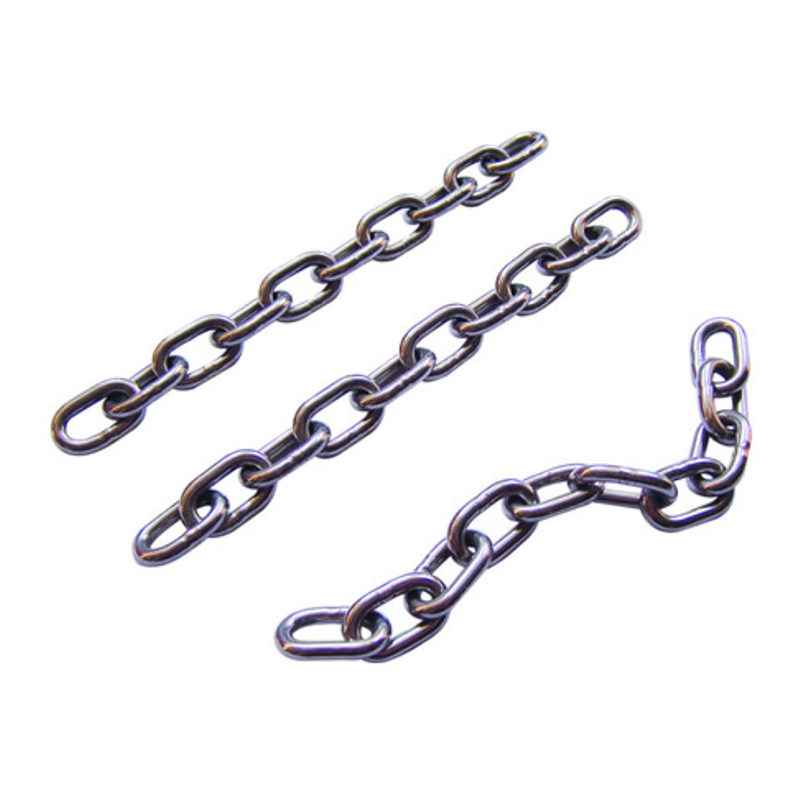
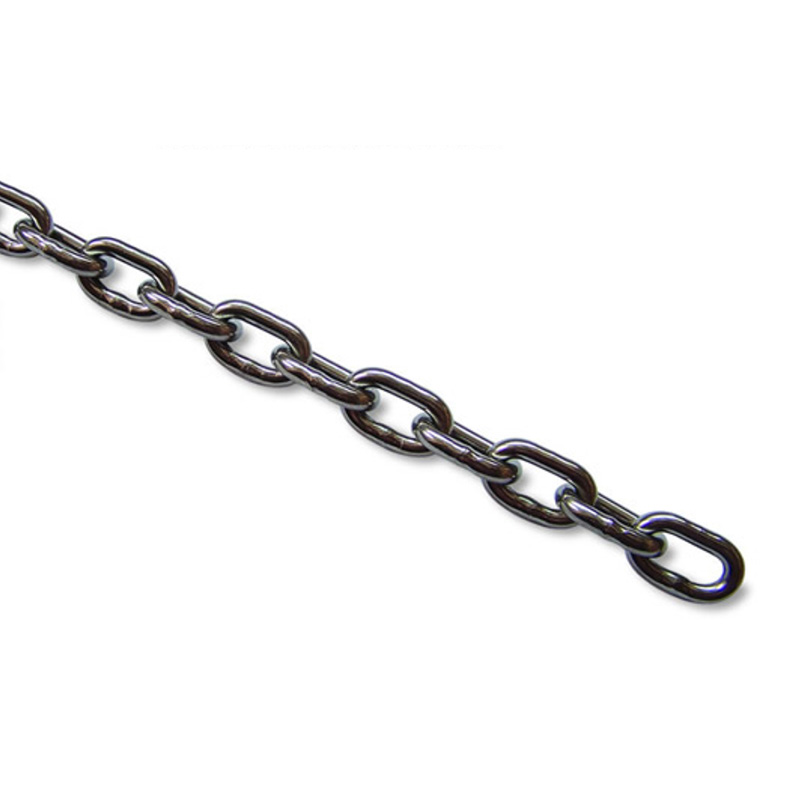
日本語A G70 binder chain is a grade-70 transport chain specifically designed for securing cargo on flatbed trailers, commercial trucks, and heavy equipment. Unlike general-purpose chains, G70 chains are engineered with high-carbon steel, heat-treated to precise specifications, and typically equipped with clevis grab hooks on both ends. This professional-grade configuration makes them the standard choice for truckers, logistics companies, and construction crews who demand reliability and regulatory compliance.
Compared to Grade 43 chains, G70 provides approximately 20% higher working load capacity at the same diameter, meaning operators can use smaller, lighter chains to achieve the same securement strength. This strength-to-weight advantage translates directly into reduced operator fatigue, faster load preparation, and lower fuel consumption over long routes. Whether you are securing lumber on logging trucks, fastening heavy machinery on flatbeds, or tying down equipment at job sites, understanding G70 specifications and selection criteria is essential for both safety and regulatory compliance.
This guide covers the technical specifications, working load limits, compliance standards, and practical applications of G70 binder chains, helping you make informed decisions for your cargo securement needs.
What Makes G70 Binder Chain Different from Other Chains?
The fundamental difference between G70 and lower-grade chains lies in material composition and manufacturing process. G70 chains are forged from high-carbon steel and undergo controlled heat treatment to achieve a specific hardness and strength profile. This metallurgical foundation allows G70 chains to resist breaking, deformation, and fatigue under extreme loads far better than commodity chains.
Material and Construction
G70 chains feature a design factor of 4:1, meaning the minimum breaking strength is four times the published working load limit. This safety margin ensures that under normal operating conditions, the chain will never reach its breaking point. The links are precisely formed and the welds are inspected for consistency, reducing the risk of premature failure from hidden defects.
All G70 chains are treated with yellow zinc plating or powder coating to resist corrosion. This protective layer extends service life in outdoor environments, on marine routes, or in high-moisture industrial settings. Unlike bare or painted chains that can rust and weaken over months of exposure, properly coated G70 chains maintain their integrity across multiple hauling seasons.
Regulatory Marking and Traceability
Every G70 chain link is permanently pressure-stamped with the grade marking "G70" and a manufacturer identification code. This visible stamp serves two critical purposes: first, it allows roadside inspectors and safety auditors to instantly verify compliance during inspections; second, it enables traceability back to the manufacturer batch, which is invaluable in rare cases of product defects or recalls. When a DOT officer stops your truck, the presence of properly marked G70 chains demonstrates your commitment to regulatory standards.
Lower-grade chains (Grade 43, Grade 30) either lack these markings or carry different designations. This distinction is not merely academic—regulatory bodies explicitly require marked, traceable chains for interstate commerce.
G70 Binder Chain Specifications and Working Load Limits
Selecting the correct size is the foundation of safe load securement. Working Load Limit (WLL) is the maximum safe load a chain can support under normal conditions. Exceeding the WLL, even by a small margin, significantly increases the risk of chain failure, load shift, and accident.
Standard G70 Chain Sizes and Capacity
The most commonly used G70 chain sizes in transportation and cargo securement are shown in the table below. These sizes balance portability with capacity, making them practical for the majority of flatbed and trailer applications.
| Chain Size | Working Load Limit | Approximate Weight (per foot) | Typical Application |
|---|---|---|---|
| 5/16 inch | 4,700 lbs | 0.42 lbs | Light to medium duty |
| 3/8 inch | 6,600 lbs | 0.75 lbs | Most common flatbed and utility trailers |
| 7/16 inch | 9,200 lbs | 1.06 lbs | Heavy equipment and machinery |
| 1/2 inch | 11,300 lbs | 1.40 lbs | Heavy haul and specialized loads |
The 3/8 inch size dominates the market because it offers an optimal balance: sufficient capacity for standard loads, reasonable weight for manual handling, and cost-effectiveness for fleet operations. However, operators working with consistently heavier loads often carry sets of both 3/8 inch and 1/2 inch chains to accommodate varying cargo weights without overspecifying or underspecifying securement strength.
How to Calculate Your Chain Requirements
Proper sizing requires three pieces of information: the total weight of your load, the number of chains or straps you will use, and a safety margin. A basic rule in logistics is that each securement point should carry no more than 75% of the working load limit. For example, if your load weighs 12,000 pounds and you use two chains, each chain should have a working load limit of at least 8,000 pounds (12,000 divided by 2, divided by 0.75). This calculation ensures that even if one chain experiences slight degradation or minor damage, the remaining chain can still hold the load safely.
Always round up to the next standard size. If your calculation yields 7,500 pounds required, do not use a 3/8 inch chain rated at 6,600 pounds; instead, select a 7/16 inch chain at 9,200 pounds or larger. The marginal cost difference is negligible compared to the risk of load failure.
How G70 Binder Chain Enhances Load Securement
The core function of a G70 binder chain is to transfer and distribute loads safely. Unlike a simple tow chain used for emergency recovery, a binder chain is engineered for sustained holding capacity, low stretch under load, and predictable behavior when tightened and secured. Understanding how these chains contribute to overall securement effectiveness reveals why they are the industry standard.
Strength-to-Weight Ratio and Operational Efficiency
Professional operators consistently report that the lighter weight of G70 chains—compared to heavier Grade 43 alternatives—reduces operator fatigue on high-volume loading days. A typical flatbed trailer might require six to eight securement points, each needing chains, binders, or straps. If an operator can reduce the weight of each chain assembly by 30 to 40 percent while maintaining the same load capacity, the cumulative effect over a full day of load preparation is substantial.
This efficiency gain extends beyond manual effort. Lighter chains mean less dead weight on the trailer, which directly improves fuel economy on long-haul routes. A reduction of 50 pounds in chain assemblies per trip translates to measurable savings in fuel costs over annual mileage. For fleets operating hundreds of vehicles, this improvement scales into six-figure annual savings.
Compliance and Regulatory Assurance
The Federal Motor Carrier Safety Administration (FMCSA) and the Commercial Vehicle Safety Alliance (CVSA) maintain specific standards for cargo securement. Key requirements include the use of marked, traceable chains; verification of working load limits appropriate to the cargo; and regular inspection of chains for damage, corrosion, or deformation before each use. G70 chains, when properly maintained, satisfy all of these requirements by default.
During a roadside inspection, DOT officials will examine your chains for the G70 marking, check for visible damage, and verify that the working load limits are documented and appropriate. A truck equipped with properly marked, well-maintained G70 chains will pass compliance checks without delay. Conversely, unmarked or degraded chains can result in citations, fines, and mandatory repair orders that pull a truck out of service.
The permanent marking also enables rapid identification during safety recalls. In the rare event that a manufacturer identifies a defect in a production batch, DOT and the company can trace affected chains by the batch codes and notify owners for replacement or inspection. This traceability, unique to properly marked G70 chains, is a built-in safeguard.
Integration with Load Binders
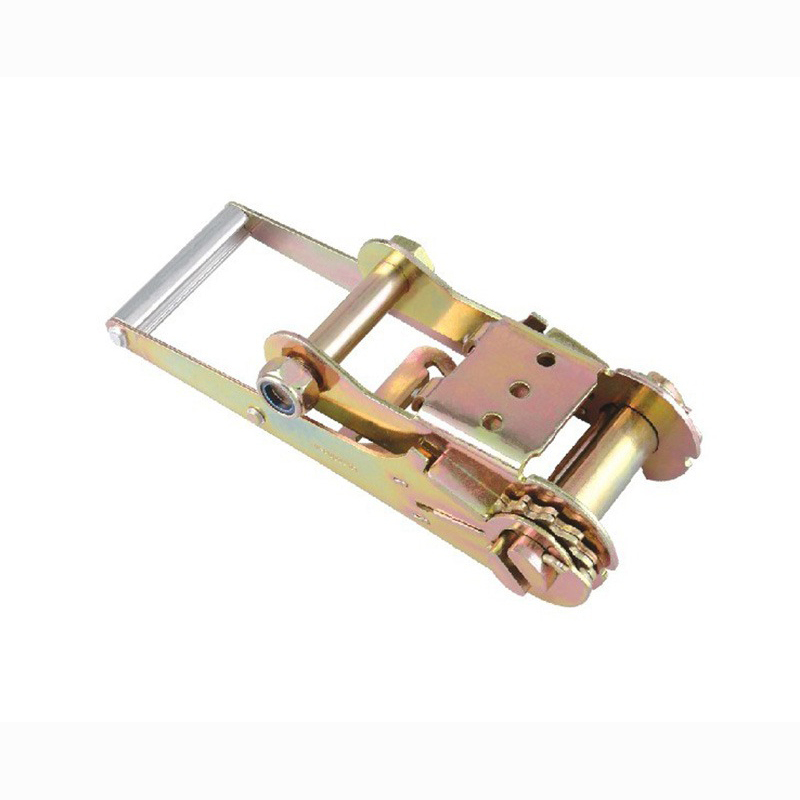
G70 binder chains are designed to work seamlessly with ratchet binders and lever binders. A ratchet binder applies tensioning force through a mechanical ratcheting mechanism, tightening the chain in small increments until the desired tension is reached. A lever binder uses hydraulic or mechanical leverage for similar results. Both tools are calibrated to work efficiently with G70 chain links, ensuring consistent, repeatable tightening without over-torquing or under-tensioning.
The combination of a G70 chain, clevis grab hooks at both ends, and a mechanical binder creates a complete, engineered securement system. Each component is designed to work with the others, minimizing weak points and distributing stress evenly. This systems-level approach is what separates professional cargo securement from improvised solutions.
Common Applications for G70 Binder Chain
G70 chains are the professional-grade standard across a wide spectrum of transportation and industrial securement tasks. The following industries and scenarios depend on G70 chains for safe, compliant operations.
Flatbed Trucking and General Freight
Flatbed trucking is the most common application for G70 binder chains. Whether hauling steel coils, palletized goods, or mixed freight, flatbed operators use G70 chains at multiple points around the perimeter of the load to prevent shifting, sliding, or collapse during transit. The 3/8 inch size is the de facto standard in this sector due to its versatility and proven reliability.
Logging and Timber Transport
Logging operations require exceptionally robust securement because timber loads are subject to high rotational and shear forces as the truck navigates curves and slopes. Loggers typically use 7/16 inch or 1/2 inch G70 chains to bind bundles of logs in place. The heavy-duty capability ensures that logs do not roll or shift, which could be catastrophic both for the load and for following traffic.
Heavy Equipment and Machinery Hauling
Specialized carriers transporting bulldozers, excavators, and other construction equipment rely on G70 chains to cradle and secure equipment in place. Because this cargo is often worth hundreds of thousands of dollars, the cost of a G70 chain assembly is a negligible fraction of the asset protection. Equipment that shifts during transport can suffer damage worth far more than the cost of proper securement, making G70 chains an obvious investment.
Building Materials and Steel Distribution
Distributors of steel beams, sheets, and structural components use G70 chains extensively. Steel products generate enormous load concentrations, and any slippage or shifting can injure workers during loading or unloading. G70 chains provide the certainty that loads remain exactly where they are positioned.
Construction Site Operations and Equipment Staging
On active job sites, equipment and materials are often secured to prevent theft or weather-related damage. G70 chains, sometimes used with locks or cable ties, are installed on generators, compressors, tool boxes, and material stacks. The durability of G70 chains makes them ideal for this use case, as they can withstand outdoor exposure and repeated tightening cycles.
G70 Binder Chain vs. Grade 43: Which Should You Choose?
For decades, Grade 43 chain was the standard in general industry. Today, G70 has become the preferred choice for professional transportation. Understanding the trade-offs helps clarify why the upgrade is often justified.
| Characteristic | Grade 43 Chain | G70 Binder Chain |
|---|---|---|
| Strength per unit size | Lower | 20% higher |
| Weight | Heavier for equivalent capacity | Lighter |
| Regulatory marking | Often unmarked | Permanently stamped G70 |
| DOT compliance (interstate) | Questionable | Fully compliant |
| Corrosion resistance | Often bare or poorly coated | Yellow zinc or powder coated |
| Typical unit cost | Lower | Moderate premium (10-20%) |
| Best suited for | Stationary storage, non-regulated use | Interstate trucking, professional operations |
When Grade 43 Might Be Acceptable
Grade 43 chain remains appropriate for non-commercial applications: securing cargo within a single state, storing equipment at a facility, or temporary fastening in industrial yards where regulatory scrutiny is minimal. It is also suitable as a backup or spare chain for operations that primarily use G70.
Why G70 Is the Professional Standard
For any operation subject to DOT inspection, involved in interstate commerce, or handling high-value cargo, G70 is not an optional upgrade—it is the practical standard. The combination of superior strength, permanent marking, documented compliance history, and corrosion resistance creates a value proposition that far exceeds the modest cost premium. A single DOT citation for non-compliant securement can cost thousands in fines and lost revenue from a pulled truck; the price difference between Grade 43 and G70 chains is negligible by comparison.
Furthermore, professional operators and shippers increasingly specify G70 in their supplier requirements and contracts. Insurance providers may also prefer or require G70 chains for cargo insurance coverage. Over the medium to long term, standardizing on G70 simplifies fleet management, reduces regulatory risk, and builds a reputation for safety and professionalism.
Frequently Asked Questions About G70 Binder Chain
Q1: Can G70 binder chain be used for overhead lifting or suspended loads?
No. G70 binder chains are engineered and certified solely for cargo securement and tie-down applications. They are not rated or approved for overhead lifting, rigging, or suspending loads from cranes or other lifting equipment. Use ASME Grade 100 rigging chains or other certified lifting chains for overhead applications. Misuse of securement chains for lifting creates serious safety risks and voids any manufacturer warranties.
Q2: What is the difference between a binder chain and a tow chain?
Tow chains are designed for emergency recovery and vehicle towing. They must withstand sudden shock loads and jerking motions. Binder chains are designed for static cargo securement, where the load is steady and the chain holds the load in place. While both may have similar breaking strengths, binder chains typically have lower design factors and are optimized for lower-cycle, sustained loads, whereas tow chains are rated for dynamic, shock-absorbing use. Using a tow chain for cargo securement or vice versa is not recommended.
Q3: How often should G70 binder chains be inspected?
Professional best practice recommends a visual inspection before every use. Check for rust, cracks, bent links, missing or damaged grab hooks, and any deformation. A more thorough inspection should be conducted every 12 months or after 100 hours of regular use. Any chain showing significant corrosion, cracks, or deformation should be removed from service and replaced. Maintaining detailed inspection logs provides documentation for regulatory compliance and insurance purposes.
Q4: What does the "G70" marking on a chain mean?
The "G70" marking indicates that the chain meets Grade 70 specifications as defined by the American Society for Testing and Materials (ASTM). This marking is a permanent pressure stamp applied during manufacturing and certifies that the chain has been manufactured, tested, and approved to meet G70 performance standards. The marking also includes a manufacturer code that allows traceability back to the production batch, enabling rapid identification in the event of a safety recall.
Q5: Is G70 binder chain DOT compliant for interstate trucking?
Yes, properly marked and maintained G70 binder chains are fully compliant with DOT, FMCSA, and CVSA standards for interstate cargo securement. The permanent G70 marking and compliance history make G70 chains the default choice for regulated transportation. However, compliance also requires proper installation, appropriate sizing for the load, regular maintenance, and documentation of working load limits. A G70 chain installed incorrectly or exceeded in load capacity is not compliant.
Q6: What is the working load limit and why is it important?
The working load limit (WLL) is the maximum safe load that a chain can support under normal operating conditions. It is typically one-quarter of the chain's minimum breaking strength, providing a 4:1 safety factor. Exceeding the WLL substantially increases the risk of chain failure, load shift, and accident. Operators must calculate the weight of their cargo, divide by the number of securement points, and ensure that each chain's WLL exceeds the resulting load per chain by at least 25%. This conservative approach prevents failure even under minor degradation or unexpected conditions.
Q7: Can I join two G70 chains together to increase capacity?
Joining chains through mechanical links or welding is not recommended unless performed by a certified professional using approved joining methods. Field welds often create weak points that compromise the structural integrity of the assembly. If you require greater capacity, purchase a single longer chain or a larger diameter chain. Using two separate chains at different securement points is preferable to attempting to extend a chain through improvised joining methods.
Q8: How should G70 binder chains be stored to prevent corrosion?
Store G70 chains in a dry, well-ventilated location away from moisture, salt spray, or harsh chemicals. If chains are stored outdoors temporarily, cover them with a protective tarp. For long-term storage in humid environments, light coating with dry lubricant or chain oil can help prevent oxidation. Inspect chains at regular intervals regardless of storage location. Even properly stored chains can develop surface corrosion over extended periods; surface rust can usually be removed with a wire brush, but deeper pitting may indicate that replacement is necessary.
Conclusion: G70 Binder Chain as the Industry Standard
G70 binder chains represent the convergence of engineering excellence, regulatory requirement, and operational efficiency. They are not simply an upgrade or variant of general-purpose chain; they are a purpose-built solution for professional cargo securement. The combination of superior strength-to-weight ratio, permanent regulatory marking, DOT compliance, and proven corrosion resistance makes G70 the logical choice for trucking fleets, logistics providers, and equipment operators who prioritize safety, compliance, and cost-effectiveness.
Whether you are managing a small fleet or operating across multiple states, investing in properly sized, well-maintained G70 binder chains eliminates a significant source of operational and regulatory risk. The modest cost premium compared to lower grades is recovered through reduced fuel consumption, extended chain service life, faster regulatory inspections, and the peace of mind that comes from knowing your cargo is securely fastened using the industry standard.
For questions about sizing, compliance, bulk pricing, or to discuss your specific securement requirements, we encourage you to reach out. Our team has extensive experience in matching cargo types and weights to appropriate chain specifications, ensuring that your operation maintains full regulatory compliance while optimizing both safety and efficiency.